📰 Lenskart Dress Code Controversy: A Debate on Inclusivity, Policy, and Public Trust
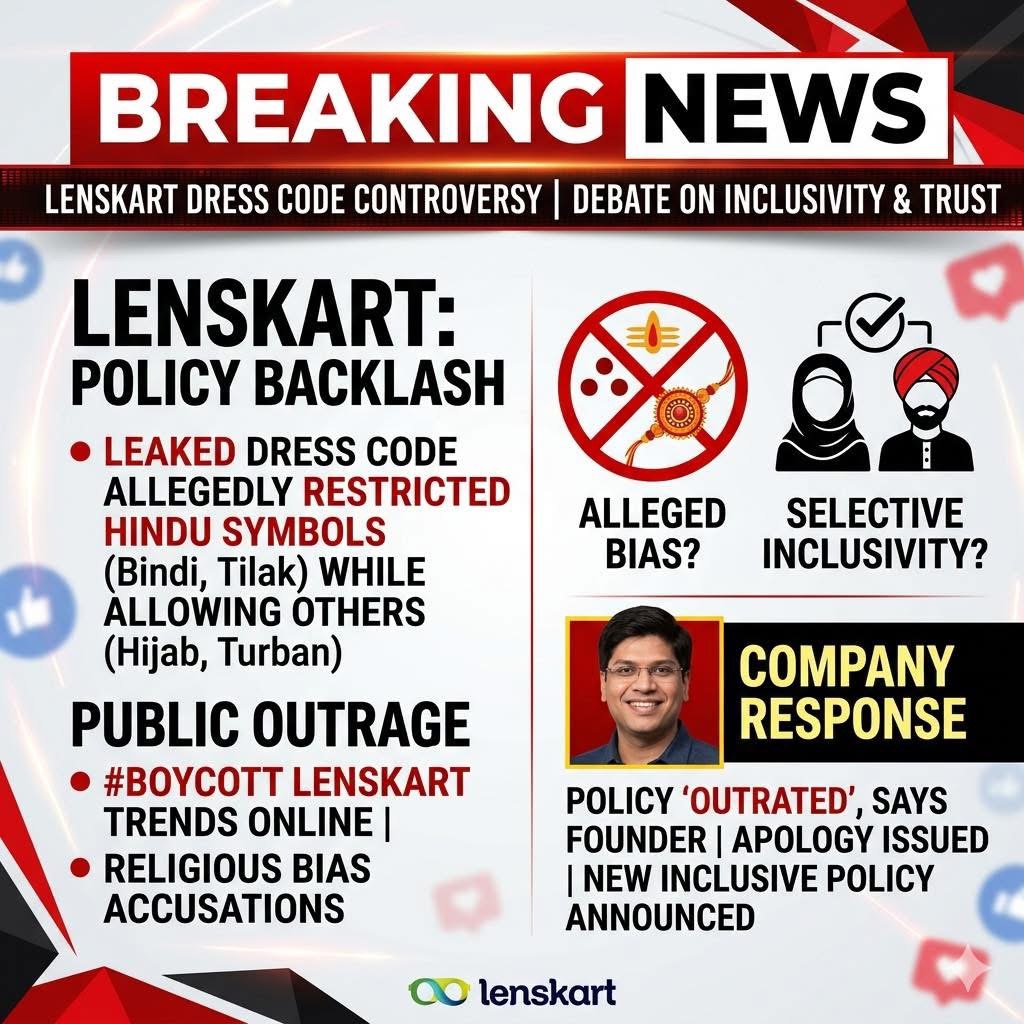
In April 2026, eyewear giant Lenskart found itself at the center of a major public controversy after an alleged internal dress code policy sparked nationwide debate. What began as a leaked document quickly escalated into a broader discussion on religious expression, workplace inclusivity, and corporate accountability in India.
🔴 What Triggered the Controversy?
The issue started when a purported internal document began circulating widely on social media platforms. According to the document:
* Employees were allowed to wear religious attire such as:
* Hijab
* Turban
* However, it allegedly restricted visible Hindu religious symbols, including:
* Bindi
* Tilak
* Sindoor
* Kalawa ❗
This perceived discrepancy led to accusations that the company was favoring certain religious expressions over others, raising concerns about unequal treatment and cultural insensitivity.
🌐 Public Reaction: Outrage and Boycott Calls
The response online was swift and intense:
* #BoycottLenskart and similar hashtags began trending across platforms like X (Twitter), Instagram, and Facebook
* Many users accused the brand of:
* Religious bias
* Selective inclusivity
* Influencers, activists, and general consumers questioned whether a modern Indian company should impose such restrictions at all
For many, the issue was not just about one company—but about how Indian workplaces handle religious identity in a diverse society.
🏢 Company Response: Clarification and Damage Control
Facing mounting backlash, Lenskart moved quickly to respond.
Statement from Leadership
Founder Peyush Bansal addressed the issue publicly, stating:
* The circulated document was “outdated” and no longer reflects current policy
* The company does not support discrimination of any kind
Immediate Actions Taken
* Issued a public apology
* Clarified that Lenskart is committed to equal respect for all religions
* Released a revised dress code policy explicitly allowing:
* Bindi
* Tilak
* Sindoor
* Hijab
* Turban
* Other religious symbols
The company positioned this move as a reinforcement of its inclusive workplace values.
⚖️ Outcome: Policy Change, But Trust Damage
While the revised policy addressed the immediate concern, the controversy left a lasting impact:
✅ Positive Outcome
* Clear and inclusive dress code policy implemented
* Public acknowledgment of the issue and attempt to correct it
❌ Ongoing Concerns
* Many critics argued the response came only after public pressure
* Questions remained about:
* How such a policy existed in the first place
* Internal governance and oversight
* Some consumers continued to call for boycotts, indicating erosion of trust
🧠 Bigger Picture: Why This Matters
This controversy highlights a deeper issue in modern corporate India:
* Balancing professionalism with cultural identity
* Ensuring equal representation of all religions
* The risk of internal policies becoming public crises in the digital age
In a country as diverse as India, even internal guidelines can quickly turn into national debates, especially when they touch upon religion and identity.
📝 Conclusion
The Lenskart dress code controversy serves as a case study in how corporate policies, when misaligned with public sentiment, can escalate rapidly. While the company has taken corrective steps, the incident underscores the importance of proactive inclusivity rather than reactive damage control.
For brands operating in today’s hyper-connected environment, transparency, sensitivity, and consistency are no longer optional—they are essential.