AAP Leader Durgesh Pathak Declines to Appear Before Delhi High Court in Liquor Policy Case
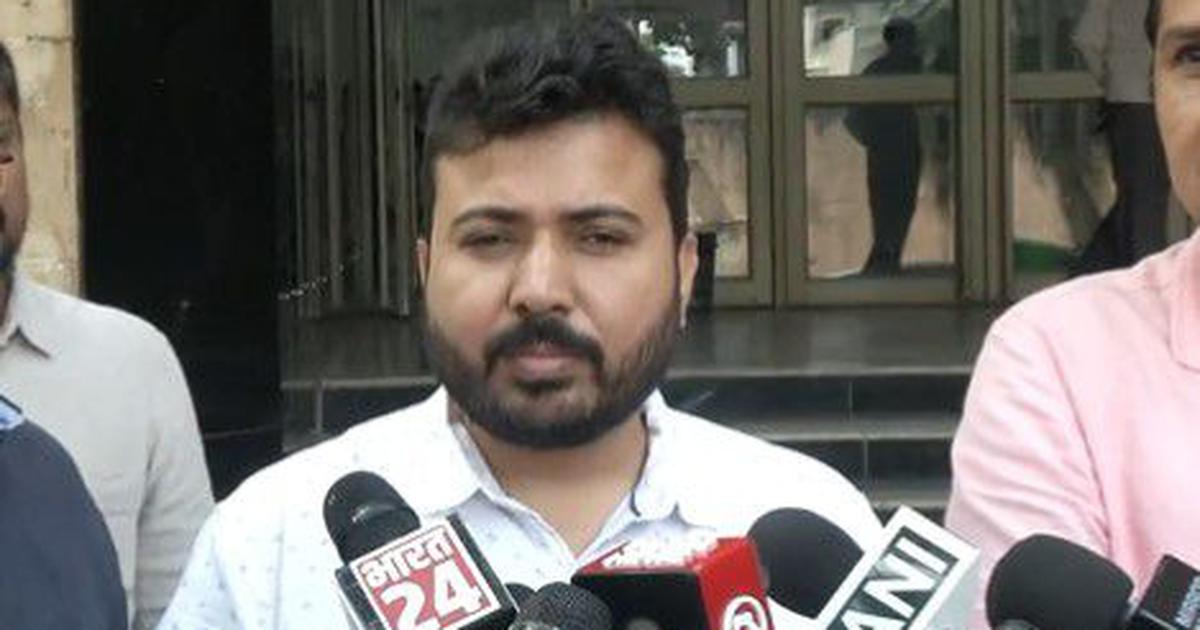
In a notable turn of events, Aam Aadmi Party (AAP) leader Durgesh Pathak has decided not to appear before Justice Swarana Kanta Sharma of the Delhi High Court in connection with the ongoing liquor policy case. Pathak’s refusal comes shortly after AAP’s National Convenor Arvind Kejriwal and former Deputy Chief Minister Manish Sisodia made similar announcements regarding their non-participation in the proceedings.
The liquor policy case has garnered significant attention, especially as the Central Bureau of Investigation (CBI) challenges a prior ruling from a trial court that exonerated Kejriwal, Sisodia, Pathak, and several others involved. The case has sparked a political storm, with the AAP leaders alleging bias against Justice Sharma, who they claim has demonstrated a pattern of favoring the CBI and the Enforcement Directorate in related matters.
In his recent communication to the court, Pathak echoed the sentiments expressed by Kejriwal, citing concerns over Justice Sharma’s impartiality. He mentioned that the judge’s past actions, particularly her attendance at an event associated with the Rashtriya Swayamsevak Sangh (RSS)—a right-wing organization linked to the ruling Bharatiya Janata Party—had raised alarms about perceived ideological biases. This has led to apprehensions regarding a fair hearing, prompting Pathak and his colleagues to withdraw from the process.
The backdrop of this legal tussle is steeped in political rivalry, with the AAP consistently claiming that the ongoing investigations into the liquor policy are politically motivated. The party believes that the CBI’s actions are part of a larger strategy by the central government to undermine its governance in Delhi. The liquor policy under scrutiny was designed to reform the liquor trade in the capital but has become the focal point of alleged corruption claims. The AAP leaders argue that their leadership is being targeted for political gain rather than genuine legal reasons.
As the case unfolds, the implications for the AAP are significant. The party stands accused of various irregularities in the formulation and implementation of the liquor policy, and the outcome could profoundly affect its governance and public perception. With the Delhi High Court’s proceedings continuing, the AAP’s decision to abstain raises questions about accountability and the balance of power between political entities and judicial authorities.