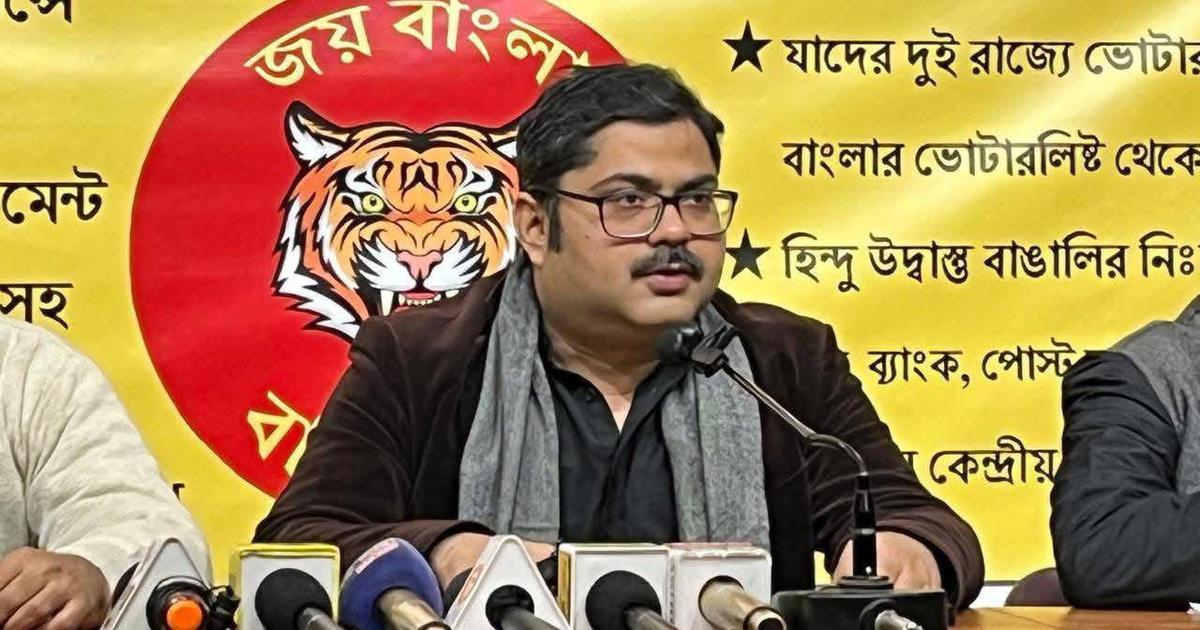
A Kolkata court has ordered that Garga Chatterjee, the chief of the pro-Bengali advocacy group Bangla Pokkho, be held in police custody for three days, with his remand lasting until May 16. This decision follows his recent arrest by the Kolkata Police, who charged him with allegedly disseminating false information regarding Electronic Voting Machines (EVMs) in the lead-up to the West Bengal Assembly elections.
The arrest took place on May 15, when Chatterjee was taken into custody by the cybercrime division of Kolkata Police after an Election Commission official lodged a complaint against him. According to sources, two separate First Information Reports (FIRs) were filed; one at the Maidan Police Station based on the complaint, and another initiated by the cybercrime division acting on its own accord. This legal action underscores the high stakes and sensitivities surrounding the electoral process in West Bengal.
Police Commissioner Ajay Nand revealed that Chatterjee’s social media posts, which suggested there were significant issues with EVM integrity and potential electoral misconduct, were seen as creating unnecessary confusion among political factions. Nand stated, “This caused different perceptions among political parties and also created confusion,” indicating the potential for such claims to incite unrest amidst a charged political climate.
Furthermore, the police had issued two notices summoning Chatterjee to provide clarification on his statements, but he failed to respond, prompting his eventual arrest. The matter has raised eyebrows regarding the accountability of public discourse, especially as it pertains to vital electoral mechanisms in a vibrant democracy like India.
Chatterjee’s comments about alleged EVM malfunctions, made public on April 23, have reignited the ongoing debate about the reliability of electronic voting systems. His arrest has drawn a mixed response from the public, with some viewing it as an essential step to uphold the integrity of the electoral process, while others argue that it suppresses free speech and democratic debate.
As West Bengal gears up for its assembly elections, the incident serves as a reminder of the critical interplay between technology, governance, and public perception in contemporary India. The ramifications of Chatterjee’s arrest might extend beyond his immediate legal challenges and could shape the narrative of the upcoming elections.