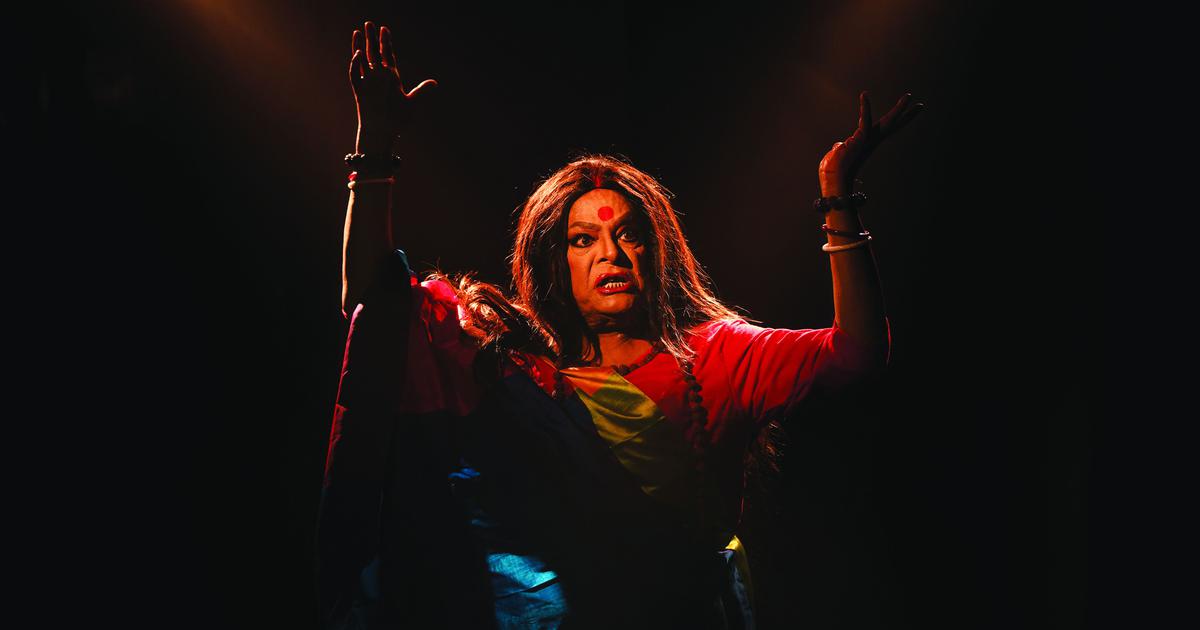
Chapal Bhaduri, a celebrated figure in the realm of jatra, has left an indelible mark on Indian theatre, particularly in West Bengal. Renowned for his multifaceted portrayal of gender, Bhaduri navigates the complexities of identity with grace, shunning the confines of identity politics. His life and career were poignantly captured in the 1999 documentary, Performing the Goddess, where he introduced audiences to his evolving persona.
In the documentary, Bhaduri presents himself in triplicate: as an elderly man in a simple kurta, reflecting on his journey, and as Chapal Rani, the vibrant, larger-than-life character he once embodied. This duality serves as a powerful commentary on the intersection of gender and performance art. As one of the last prominent figures of the purush rani—male performers who portray female roles—Bhaduri has earned respect and admiration, becoming a cultural icon within the declining art form of jatra.
Jatra, a traditional folk theatre of Bengal, has faced criticism over the years, often dismissed as lower-class entertainment. The popular quip “Jatra dekhe fatra loke” suggests that jatra’s audience is often considered unrefined. Yet, artists like Bhaduri have proven that beneath the surface, there exists a profound narrative that resonates with many. Through his portrayal of women on stage, Bhaduri challenges societal norms and invites audiences to reflect on gender fluidity.
As Bhaduri recounts his experiences, it becomes evident that he embodies the spirit of jatra. His performances are not just acts but a celebration of the body, gender, and the sheer joy of storytelling. Even when out of costume, his charisma shines through, reinforcing the idea that the essence of the character transcends clothing. Bhaduri’s journey is a testament to the transformative power of art, as he navigates the boundaries of gender and identity with remarkable ease.
While the popularity of jatra has waned in recent years, Bhaduri’s legacy endures. He serves not only as a reminder of the art form’s rich history but also as an advocate for embracing one’s true self without succumbing to societal pressures. His life is a compelling narrative of resilience, creativity, and the celebration of diversity, making him an inspiring figure for both artists and audiences alike.