Dambulla Flashpoint: A Reminder of Cricket’s Fine Line Between Sledging and Crossing the Line
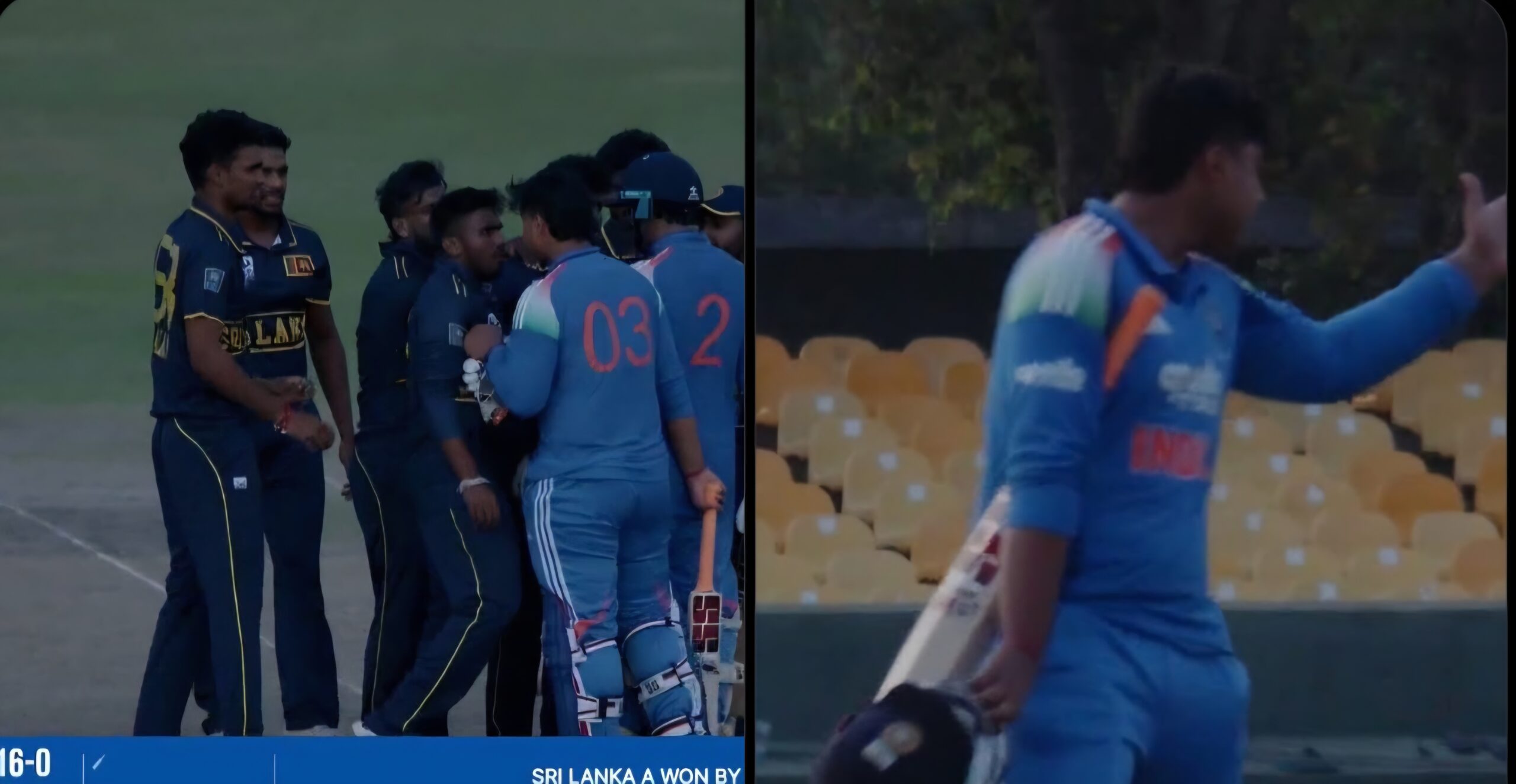
The India A-Sri Lanka A encounter in Dambulla will be remembered not only for its dramatic finish but also for the heated confrontation involving 15-year-old Indian batting prodigy Vaibhav Suryavanshi and several Sri Lankan players after the match.
As expected, social media quickly split into opposing camps. One side portrayed Suryavanshi as an emotional teenager who reacted to sustained provocation, while the other focused on the visible physical confrontation and argued that the youngster crossed a line. The reality, however, is likely more nuanced than either extreme suggests.
Reports and clips circulating online indicate that verbal exchanges between Suryavanshi and Sri Lankan players had been taking place throughout the match. Several claims suggest that the Indian youngster was repeatedly targeted with comments about his IPL success and experience, including remarks implying that international and A-team cricket was different from franchise cricket. While sledging has long been part of cricket’s psychological battles, repeated targeting of a player—particularly a teenager making his way through elite cricket—can naturally create frustration.
Competitive banter is not new to the sport. Some of cricket’s fiercest rivalries have featured verbal contests aimed at disrupting an opponent’s concentration. Many players view it as an accepted part of high-level competition. However, there is an important distinction between occasional sledging and persistent verbal needling. When comments become excessive or personal, they risk moving beyond gamesmanship and into behaviour that can be viewed as intimidation.
At the same time, the footage from Dambulla also shows why Suryavanshi himself cannot be entirely absolved of responsibility. Regardless of the provocation, physical contact has no place in cricket. It remains a non-contact sport built on the expectation that players maintain composure even in emotionally charged situations. Any push or physical reaction, however minor, inevitably shifts attention away from the original provocation and places scrutiny on the player who reacts.
Context, however, remains important. Suryavanshi is only 15 years old and was walking off after a painful defeat. Losing a close contest is difficult for any cricketer; doing so as a teenager under intense public attention can be even more challenging. If verbal comments continued as he was leaving the field, it becomes easier to understand how emotions may have boiled over, even if that reaction cannot be justified.
The responsibility, therefore, should not fall on one individual alone. Young players must learn that responding physically is never the answer, regardless of what is said. Equally, senior and more experienced players should recognise their responsibility in managing on-field aggression and ensuring that competitive spirit does not escalate into unnecessary hostility.
What happened in Dambulla should serve as a learning experience for everyone involved. Suryavanshi will undoubtedly encounter far greater pressure and scrutiny as his career progresses. Developing the ability to absorb verbal challenges without reacting will be an important part of his growth as a cricketer. At the same time, opposition players should remember that the objective of sledging is to compete, not to bully.
In the end, the incident was not simply about a teenager losing his temper, nor was it solely about opposition players engaging in verbal gamesmanship. It was a combination of both. Cricket thrives on passion, intensity and rivalry, but those qualities must operate within clear boundaries. Words may be part of the contest; physical confrontations should never be.