In a bold move to document the widespread dissent against one of India’s most controversial political periods, John Oliver Perry, an English Professor at Tufts University, initiated a significant literary project in 1978. He placed advertisements in leading Indian newspapers, including the Times of India and Hindustan Times, seeking submissions of poems that expressed resistance to the Emergency, which lasted from 1975 to 1977.
The result of this ambitious venture was the anthology titled Voices of Emergency: An All India Anthology of Protest Poetry of the 1975-1977 Emergency. Published five years later, the anthology features an impressive collection of 280 poems translated into 15 different languages. Perry, who faced the challenge of navigating a linguistic landscape he was unfamiliar with, relied on the support of hundreds of Indian poets, editors, translators, and social activists. His determination to bring these voices together highlighted the power of poetry as a form of resistance against government oppression.
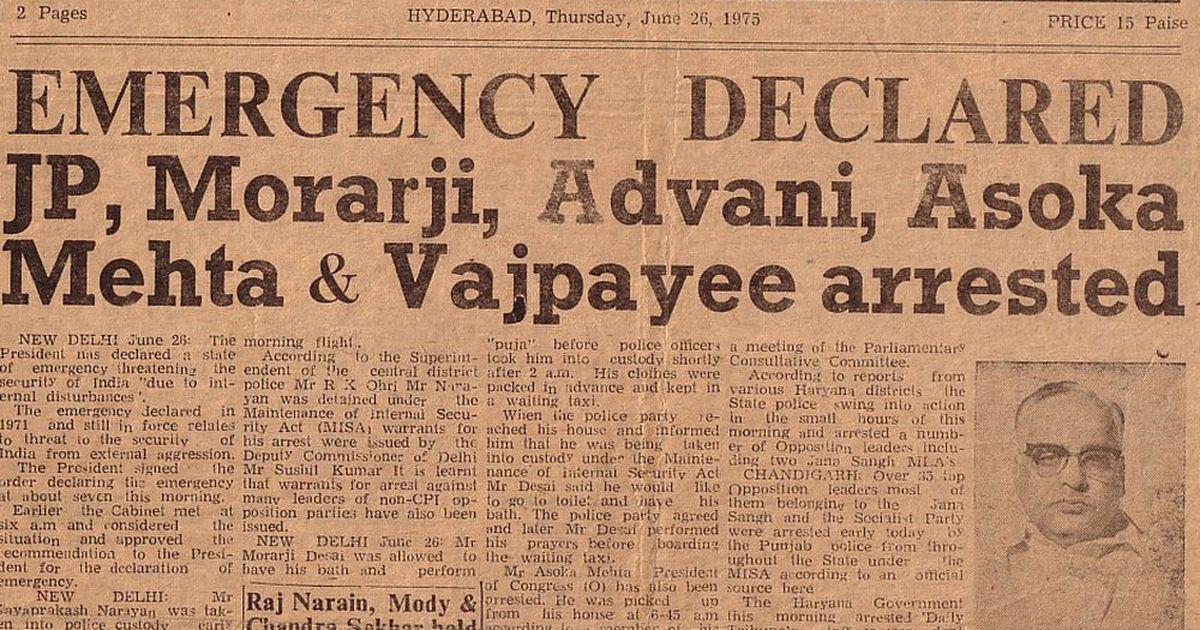
The Emergency was declared by President Fakhruddin Ali Ahmed on June 25, 1975, following the advice of then-Prime Minister Indira Gandhi. This period saw the government implement severe restrictions on civil liberties, resulting in the arrest of thousands of political dissenters, extensive censorship of the press, and a ban on strikes and protests. Such measures were justified by the government as necessary to maintain national security, but they ignited a fierce backlash from various sectors of society. Perry’s anthology serves as a crucial documentation of this dissent, capturing the spirit of resistance and the yearning for freedom among the people.
Perry’s anthology not only celebrates the resilience of poets and activists during this tumultuous time but also sheds light on the harsh realities faced by the public under an authoritarian regime. Among the notable inclusions are poets who used their craft to challenge the status quo, articulate the struggles of the marginalized, and demand justice. In doing so, Voices of Emergency becomes a historical artifact that provides insight into the socio-political climate of India during the Emergency.
Today, as India continues to navigate its complex political landscape, the themes explored in this anthology resonate more than ever. The poetry reflects a universal struggle for rights and freedoms that transcends borders and time. Perry’s work, underscored by the collaboration of Indian artists and intellectuals, emphasizes the importance of cultural exchange in the fight against injustice. As we delve into these powerful verses, we are reminded that literature can serve as a formidable weapon against oppression, fostering a sense of solidarity among those who dare to challenge authoritarianism.