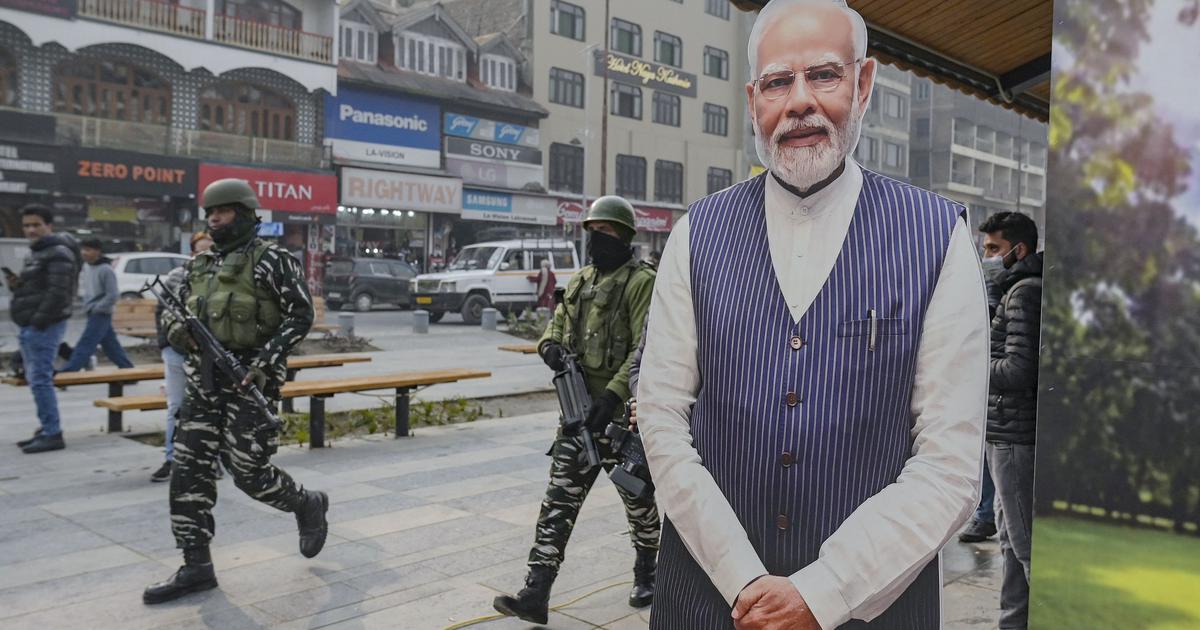
The political landscape of India has witnessed a significant transformation since the Bharatiya Janata Party (BJP) regained power in May 2019. One of the most controversial moves during this period was the revocation of Article 370, which had historically granted special status to Jammu and Kashmir. On August 5, 2019, Prime Minister Narendra Modi’s government took the unprecedented step of nullifying this constitutional provision, a decision that sent shockwaves across the nation and the globe.
By implementing this change without the backing of the Jammu and Kashmir assembly—which was under President’s Rule at the time—the government not only dismantled a vital aspect of the region’s autonomy but also bifurcated it into two Union Territories: Jammu and Kashmir and Ladakh. While some lauded this action as a necessary reform, experts argue that the federal framework established by Article 370 had been progressively undermined over the years. Successive governments and even the judiciary had, at times, diluted its significance, paving the way for the current administration to deliver what many see as the final assault on regional autonomy.
However, the shift towards centralization did not stop with Jammu and Kashmir. The passage of the Citizenship (Amendment) Act (CAA) in December 2019 further exemplified this trend. By introducing religion as a basis for citizenship, the CAA controversially excluded Muslims from a list of persecuted minorities eligible for expedited citizenship from neighboring countries. This move ignited widespread protests and discussions about the essence of Indian secularism and the criteria that define national identity.
The implications of these actions extend far beyond legal frameworks; they pose fundamental questions about the nature of governance in India. Critics argue that the centralization of power not only undermines federalism but also threatens the pluralistic and multicultural ethos that the country has long prided itself on. As the government consolidates authority, fears arise about the marginalized voices that may be silenced in the process.
As we delve deeper into the ramifications of these policies, it becomes essential to consider the long-term effects on India’s democratic fabric. The tension between central authority and regional autonomy is not a new phenomenon, but the recent developments have intensified the debate about the future of federalism in India. With voices from various corners calling for a return to a more balanced power distribution, the nation’s political dynamics seem poised for a pivotal change.