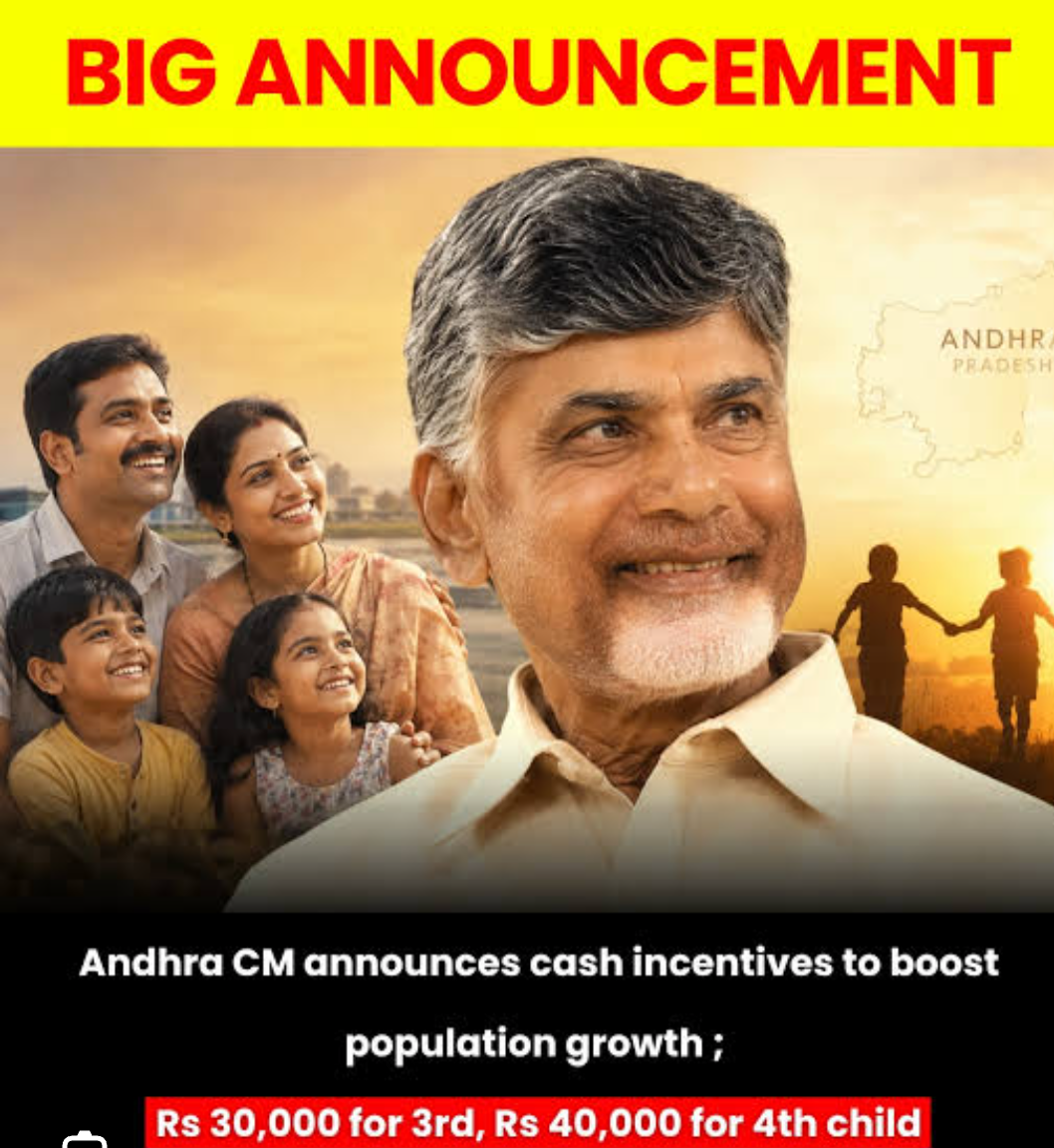
From Population Control to Expansion: The Strategic Pivots of Andhra Pradesh
Introduction
For decades, Indian states have structured their socio-political apparatuses around population stabilization, utilizing statutory restrictions to disincentivize large families. A classic example of this paradigm was the historic “two-child norm,” which long barred individuals with more than two children from contesting local body and municipal elections in states like Andhra Pradesh, Gujarat, and Madhya Pradesh (Mishra & Paul, 2022). However, structural demographic imbalances have prompted a fundamental reassessment of these restrictive approaches. Andhra Pradesh Chief Minister N. Chandrababu Naidu has catalyzed a historic policy inversion by announcing upcoming incentives to encourage population growth, a move meant to counter an aging population and a rapidly dropping Total Fertility Rate (TFR).
The Changing Demographic Landscape
While India historically focused on population control, regional variances tell a more complex story. Southern states, particularly Andhra Pradesh and Telangana, have experienced steep fertility declines and an increasing compression of women’s reproductive spans over the past three decades (Saggurti, 2025; Padmadas et al., 2004).
The TFR Factor: Andhra Pradesh’s TFR has settled well below the standard replacement level of 2.1, introducing long-term fiscal and socioeconomic risks (Ståhlgren, 2016).
The Dependency Crisis: Projections suggest that despite India’s national population scale, specific regions face acute shortages in their middle-aged working-class population, risking high old-age dependency ratios by 2050 (Rao, 2025).
Key Policy Components: Incentives Over Disincentives
The proposed framework marks a shift away from punitive measures toward collaborative socio-economic incentives designed to balance regional demographics.
1. Repealing Electoral Barriers
The administration plans to completely remove the statutory provisions that historically disqualified citizens with more than two children from contesting urban municipality and rural Panchayat elections (Anukriti, 2014). This reopens local leadership opportunities to larger families, turning political candidacy into a platform for civic representation rather than a tool for family regulation.
2. Structural and Financial Support
To support this policy shift, the state is prioritizing structural improvements that ease the economic costs of larger families. Research indicates that structural assurances—such as reliable primary healthcare, accessible maternity care, and quality public education—are critical in helping families feel secure enough to have more children (Rao, 2025).
Geopolitical and Economic Pressures
The administration’s pivot is largely driven by long-term geopolitical and economic pressures, particularly regarding the national delimitation exercise and its connection to the division of central tax revenues.
The Delimitation Risk: Southern states fear that a strict adherence to historical family planning targets could unintentionally lower their political representation in parliament and reduce their share of central fiscal allocations compared to faster-growing northern states.
By steering the state’s population curve upward, the administration aims to protect its regional representation and maintain a balanced demographic dividend capable of sustaining future economic growth.