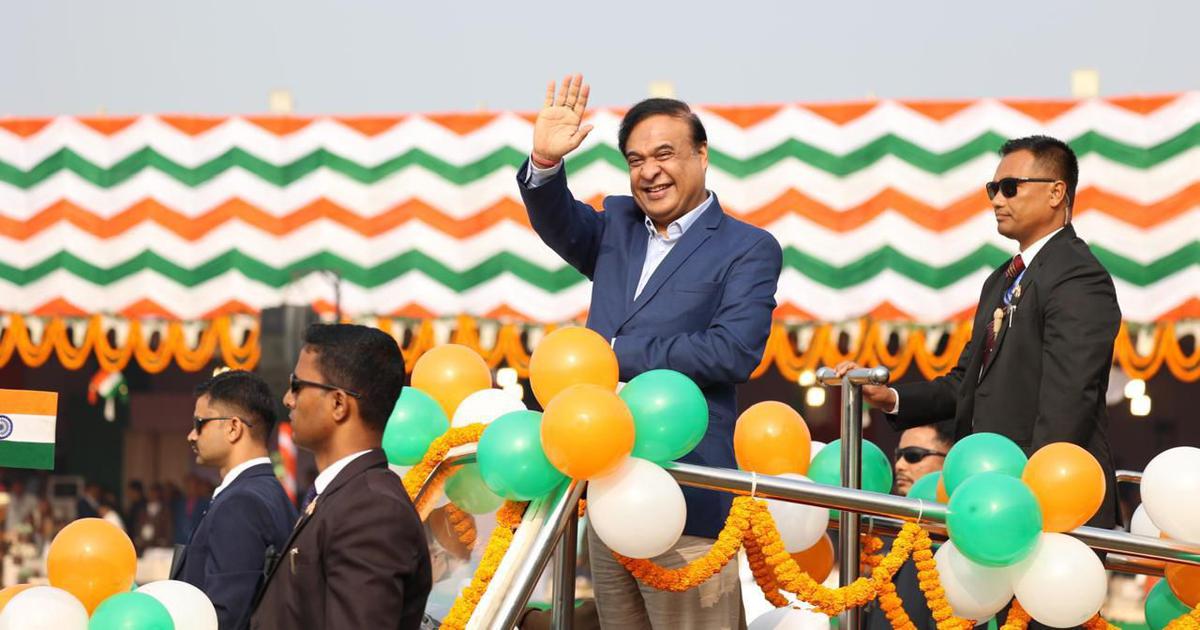
In a significant political development, Himanta Biswa Sarma, a prominent leader of the Bharatiya Janata Party (BJP), was sworn in as the Chief Minister of Assam for a second consecutive term on Tuesday. The oath-taking ceremony was presided over by Governor Lakshman Acharya and witnessed the presence of several high-profile politicians, including Prime Minister Narendra Modi, who attended to lend their support to Sarma and the BJP-led National Democratic Alliance (NDA).
Sarma’s second term comes just eight days after the BJP achieved a remarkable victory in the state elections, securing its third consecutive term in Assam. The election results, announced on May 4, revealed that the BJP clinched 82 out of 126 seats in the Assam Assembly, far surpassing the majority threshold of 64 seats required to govern. The NDA, which includes coalition partners like the Bodoland Peoples Front and the Asom Gana Parishad, collectively won 102 seats, demonstrating a solidified political presence in the region.
In the recent elections, the Congress party managed to secure only 19 seats, with its ally, the Raijor Dal, winning 2 seats. Notably, Sarma retained his Jalukbari constituency with a staggering margin of over 89,400 votes against Congress candidate Bidisha Neog, further solidifying his political stature.
Sarma first assumed the role of Chief Minister in 2021, succeeding Sarbananda Sonowal, marking a pivotal moment in the BJP’s governance in Assam. His leadership has been characterized by significant initiatives aimed at the state’s development, including various welfare schemes and social programs that have garnered public support. The recent election saw a remarkable voter turnout of 85.9%, surpassing the previous election’s turnout of 82%, indicating a heightened engagement from the electorate.
The BJP’s success in Assam can be attributed to a combination of factors, including a strong Hindutva ideology that resonates with a substantial portion of the electorate, effective welfare policies, and strategic grassroots campaigning. As Sarma embarks on his second term, the focus will likely shift to implementing the party’s agenda while addressing the key concerns of the populace, including economic growth, education, and infrastructure development.