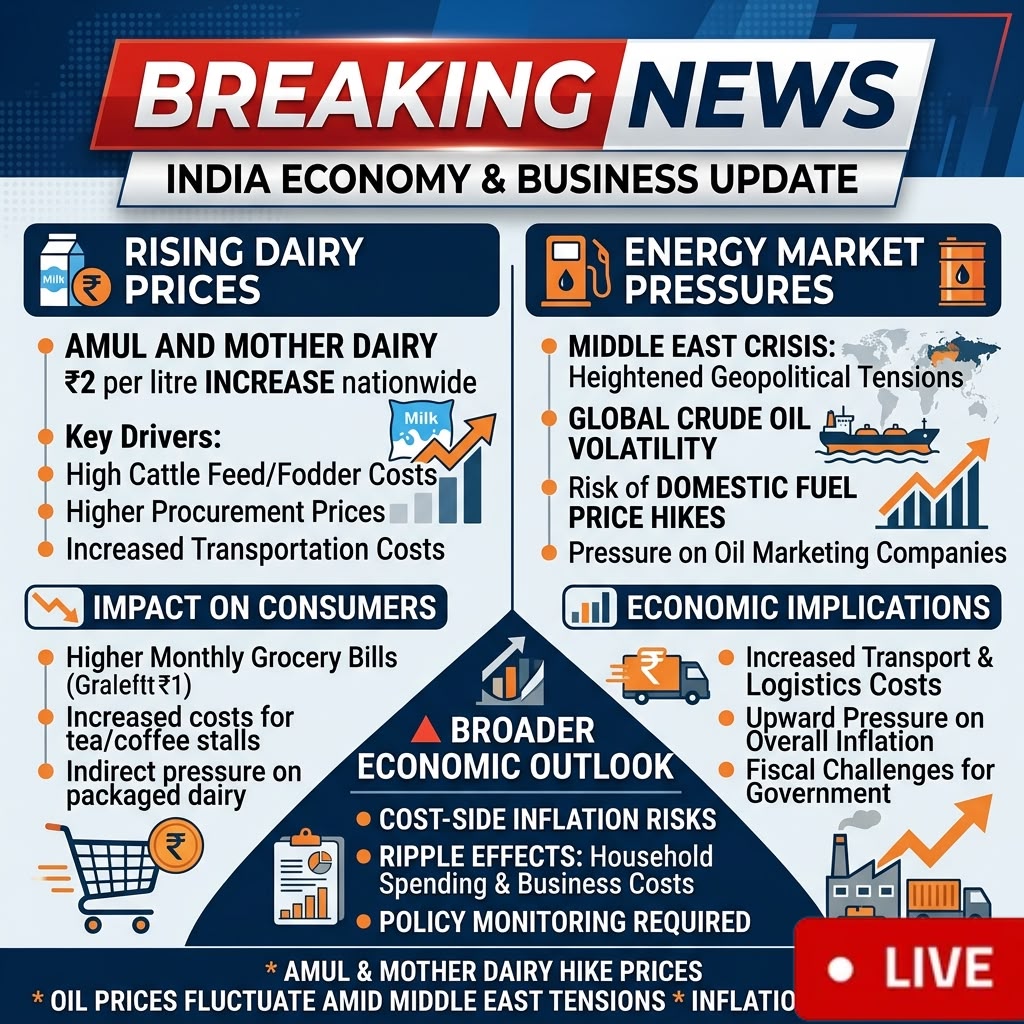
India Economy & Business Update: Rising Dairy Prices and Energy Market Pressures
India’s economic landscape is currently facing renewed cost pressures across essential sectors, particularly in daily consumption goods and energy markets. Recent developments highlight the impact of global instability and rising input costs on household expenses and macroeconomic planning.
Amul and Mother Dairy Increase Milk Prices Nationwide
India’s two largest dairy suppliers, Amul and Mother Dairy, have announced a ₹2 per litre increase in milk prices across the country, impacting millions of households that depend on dairy products for daily consumption.
Key reasons behind the price hike:
* Rising cost of cattle feed and fodder
* Increased transportation and logistics expenses
* Higher procurement costs from dairy farmers due to seasonal supply pressure
* Overall inflation in agricultural input costs
Impact on consumers:
* Household monthly grocery bills are expected to rise
* High demand categories such as tea, coffee, and packaged dairy products may see indirect price pressure
* Small vendors, tea stalls, and food businesses may face margin compression
Industry perspective:
The dairy sector has been under consistent cost pressure over the past year due to fluctuating feed prices and climate-related stress on milk production. The price revision is seen as a necessary adjustment to maintain supply chain stability and farmer income sustainability.
Energy Sector Under Pressure Amid Middle East Crisis
India is also closely monitoring global energy markets, as ongoing geopolitical tensions in the Middle East continue to create uncertainty in crude oil and fuel supply chains.
Key concerns for India:
* Risk of rising global crude oil prices
* Potential increase in petrol and diesel prices domestically
* Pressure on Indian oil marketing companies due to refinery under-recoveries
* Volatility in shipping routes and energy transportation costs
Why the Middle East matters:
A significant portion of India’s crude oil imports comes from the Middle East. Any disruption in this region directly affects:
* Import bills
* Fuel pricing stability
* Foreign exchange reserves
* Inflation levels in the economy
Economic implications:
If crude oil prices continue to rise:
* Transport costs are likely to increase
* Inflation may see upward pressure
* Government may face fiscal balancing challenges
* Oil marketing companies could experience reduced margins
Broader Economic Outlook
These two developments together highlight a broader theme in India’s current economic environment:
Cost-side inflation pressures:
* Food inflation driven by dairy and agricultural inputs
* Energy inflation influenced by global geopolitical instability
Ripple effects on economy:
* Increased household spending burden
* Higher operating costs for businesses
* Potential upward pressure on overall inflation index
* Policy monitoring required from monetary and fiscal authorities
Conclusion
India’s economy is currently navigating a sensitive phase where both essential consumer goods and energy inputs are facing price pressures. While dairy price hikes reflect domestic supply chain cost realities, the energy sector remains vulnerable to global geopolitical developments.
Together, these trends underscore the importance of stable supply chains, efficient policy response, and careful monitoring of inflationary risks in the coming months.