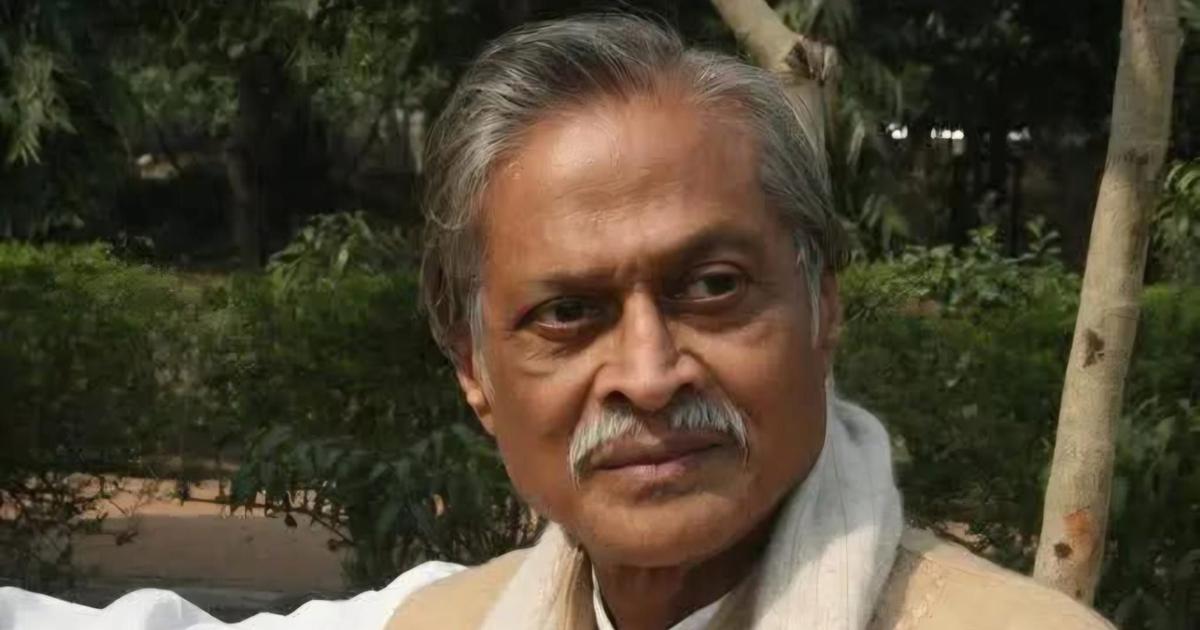
The literary world has lost a beacon of creativity and intellect with the passing of Jagannath Prasad Das, affectionately known as JP, whose life spanned from 1936 to 2026. Renowned as a poet, novelist, and a significant figure in Odisha’s cultural landscape, JP’s works continue to resonate deeply within the hearts of many Indians. His dedication to exploring the complexities of human existence through literature was not only a testament to his talent but also an invitation for readers to seek coherence in a fragmented world.
My personal introduction to JP came in 1982, courtesy of Girija Bhusan Patnaik, a well-respected social activist from Odisha. As I prepared to embark on my academic journey at Oxford, I was encouraged to meet this literary giant who had already begun to leave an indelible mark on the poetic realm. At the time, JP was serving as the Resident Commissioner at the Orissa Bhawan in New Delhi. His first collection of poems, ‘Pratham Purush,’ beautifully illustrated by the legendary filmmaker Satyajit Ray, was a hot topic among the students at Ravenshaw College, where I was studying.
Upon our meeting, I found JP to be courteous yet somewhat detached, a demeanor that initially left me feeling underwhelmed. Our conversation took a turn when I mentioned my plans to delve into the works of Walter Scott. JP’s response hinted at his belief that my life at Oxford would be filled with excitement, showing a glimpse of his reflective nature. Despite this brief interaction, it became clear that JP was not just a poet; he was a thinker who had dedicated his life to finding meaning amidst the chaos of contemporary society.
Fast forward to 1992, my perspective changed considerably after reading JP’s historical novel ‘Desh Kaal Patra.’ This book was a revelation, showcasing a masterful blend of historical accuracy and rich storytelling. Each chapter transported readers to specific locations and dates, weaving a narrative that was both engaging and educational. The characters, drawn from actual events and figures, brought history alive in a manner that was unexpected and utterly captivating. This was not just literature; it was an exploration of identity and heritage, a deep dive into the soul of India.
JP’s ability to infuse his narratives with a sense of place and time made his works a unique experience for readers. His literary contributions echo the sentiments of many Indians who grapple with understanding their past while navigating the present. As the cultural landscape of India continues to evolve, JP’s legacy serves as a reminder of the importance of storytelling in uniting fragmented narratives. By reflecting on our history through literary forms, he has encouraged future generations to seek harmony in their lives and societies.