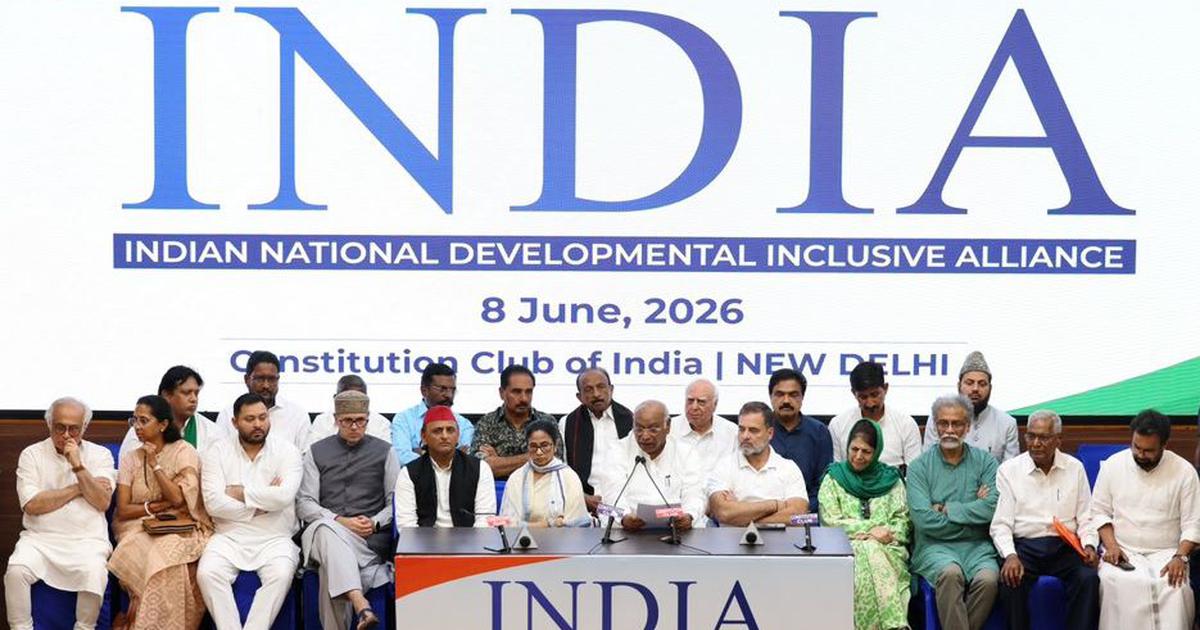
As the Indian National Developmental Inclusive Alliance (INDIA) bloc approaches its third anniversary, it presents an occasion for introspection on its journey since its formation. Initiated on June 23, 2023, in Patna, this coalition of fifteen opposition parties emerged with a shared aim: to challenge the dominance of the Bharatiya Janata Party (BJP) in the upcoming 2024 Lok Sabha elections. While the endurance of this alliance is commendable, questions linger about its effectiveness and future direction.
The inception of the INDIA bloc can be credited to Bihar’s Chief Minister Nitish Kumar, who sought to unite various regional parties into a formidable front against the BJP. Initially, the coalition’s leadership appeared to be in the hands of smaller regional parties, with the Indian National Congress (INC) expected to play a subordinate role. However, the dynamics have shifted significantly over the last three years, with the Congress now assuming a more influential position within the alliance.
Despite its formation and the initial enthusiasm surrounding it, recent developments have cast doubts on the bloc’s potential. Nitish Kumar’s decision to abandon the alliance and return to an alliance with the BJP signifies a significant fracture. Moreover, other major opposition parties, notably the Trinamool Congress (TMC) and the Dravida Munnetra Kazhagam (DMK), have also faced setbacks following disappointing performances in recent elections. The TMC, under Mamata Banerjee, lost its stronghold in West Bengal after a remarkable 15-year tenure, while the DMK experienced unexpected defeat in Tamil Nadu, raising further concerns about the INDIA bloc’s viability.
These setbacks underline the formidable challenges that the INDIA bloc faces as it seeks to unify diverse political ideologies and regional interests. The coalition’s ability to present a cohesive alternative to the BJP is crucial, yet the path ahead is fraught with obstacles. The internal dynamics among member parties, varying electoral strategies, and the overarching influence of regional politics will play pivotal roles in shaping the bloc’s fortunes in the upcoming elections.
Looking forward, the INDIA bloc must strategically navigate these complexities to strengthen its position. This may involve redefining its leadership structure, enhancing communication among member parties, and developing a unified platform that resonates with voters across different states. To regain momentum, the coalition will need to engage with the electorate effectively, addressing pressing issues such as inflation, unemployment, and social justice, which remain central to Indian voters.
In conclusion, as the INDIA bloc enters its third year, it stands at a crossroads. While its survival is an achievement in itself, the true test lies in its ability to transform from a mere coalition into a credible opposition that can challenge the BJP’s hegemony in Indian politics. The road ahead will require collective effort, strategic planning, and above all, a clear vision for a united opposition.