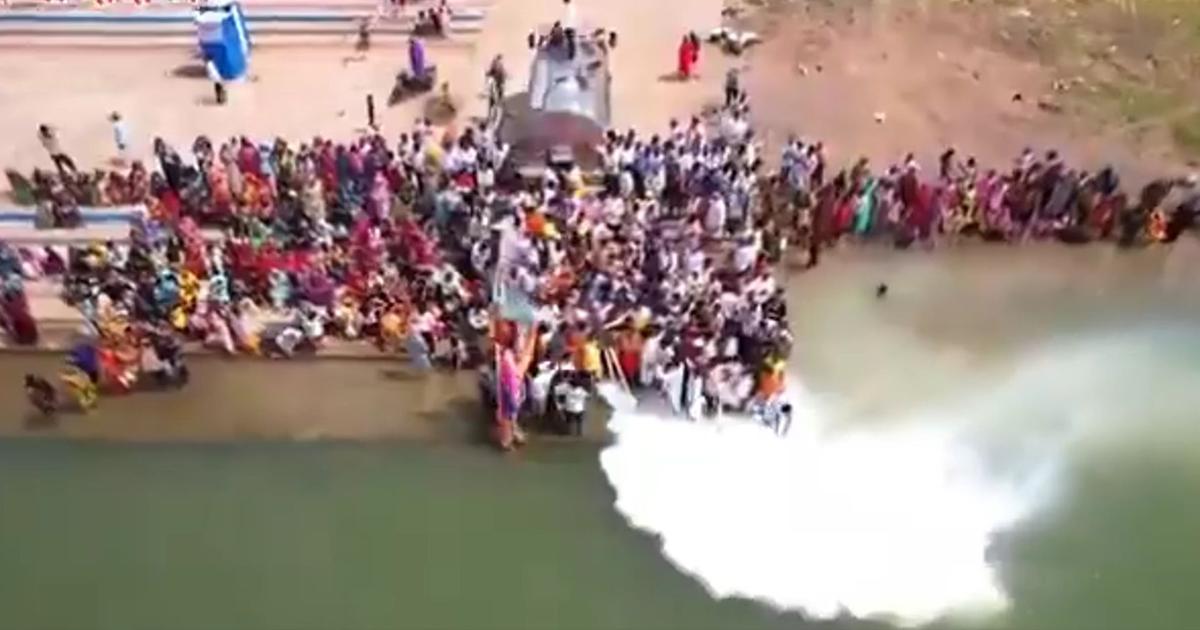
In a stunning display earlier this month, thousands of liters of milk were poured into a river as part of a religious ritual, prompting a wave of introspection about the current state of our spiritual practices and civic responsibilities. This spectacle raises significant and uncomfortable questions surrounding the essence of our faith, the government’s role in safeguarding public resources, and our collective disconnect from reality.
Critiquing this act should not be misconstrued as an attack on religion itself. Even devout followers of Hinduism might agree that their faith deserves to be preserved from such thoughtless and mechanical expressions. This incident highlights a troubling trend: the commodification of spirituality, where devotion has transformed into a show of material excess rather than a genuine expression of faith.
Traditions like Bhakti emphasize ethical transformation, encouraging adherents to transcend their egos and recognize divinity in everyday life. In stark contrast, what we witness today resembles a shallow performance that showcases a gluttonous consumption of resources, reinforcing an alarming comfort with the concentrations of power and wealth that characterize our society. This ritualistic wastefulness, exemplified by milk flowing into already polluted waters, starkly illustrates a disconnect between right and good, a rift that has emerged within the sphere of spirituality.
The staggering volume of milk poured into the Narmada River—11,000 liters, to be exact—becomes a metaphor for the deeper societal issues at play. The river, already besieged by industrial waste and untreated sewage, stands as a testament to our collective negligence towards environmental sanctity. Yet, here we are, prioritizing a hollow ritualistic display over the pressing need to address real-world challenges. Such acts of sacrificial waste divert attention from issues like pollution and resource conservation, ultimately reducing sacred rituals to mere spectacles of power.
This kind of ritualistic behavior hints at a broader malaise within our society, reflecting a disconnection from the essential tenets of our traditions. Instead of fostering community and ethical growth, rituals have become avenues for competition and rivalry, a way for individuals to flaunt their resources at the cost of the environment. This ongoing trend signals not just a crisis in our spiritual practices but also a profound moral evasion that prevents us from engaging with the pressing issues that confront our society today.