Supreme Court Revokes Ban on Academics Over Controversial Chapter on Judicial Corruption
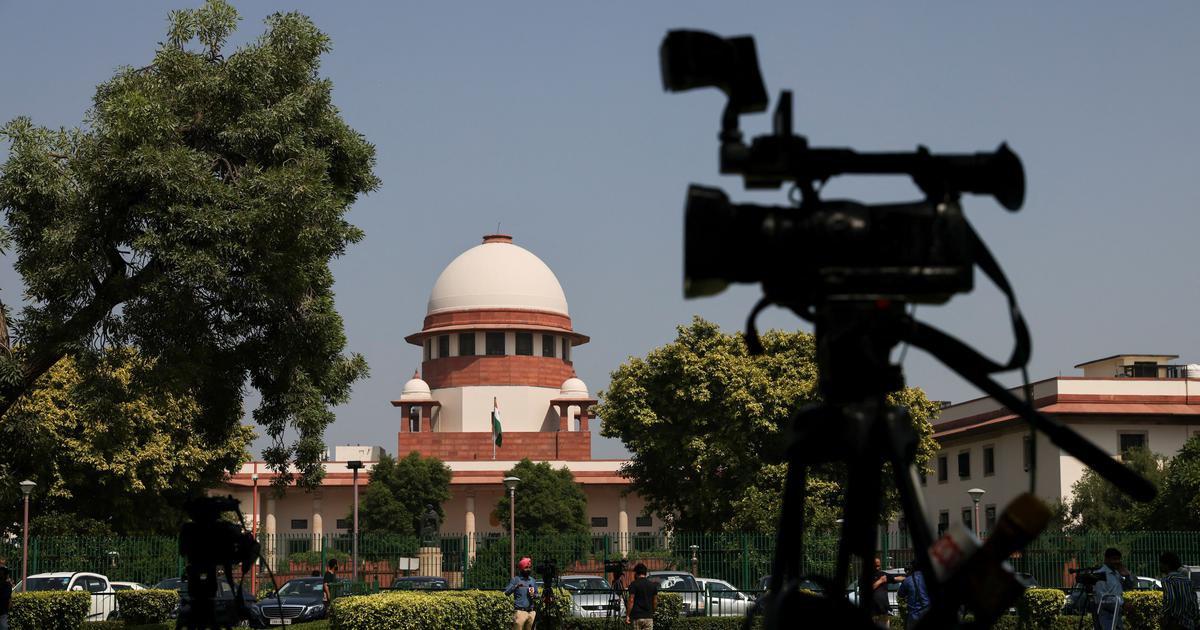
The Supreme Court of India took a significant step on Friday by reversing its earlier directive that prohibited three scholars from participating in government projects. This decision comes in light of a controversial chapter concerning ‘corruption in the judiciary’ that was included in a now-retracted NCERT textbook. Chief Justice Surya Kant, along with Justices Joymalya Bagchi and Vipul Pancholi, acknowledged that while the court retained its stance that the chapter was ‘wholly undesirable and unnecessary,’ it found sufficient justification in the explanations provided by the authors.
The chapter in question was part of a Class 8 social science textbook titled ‘Exploring Society: India and Beyond,’ published by the National Council of Educational Research and Training (NCERT). It identified various levels of corruption as challenges faced by the Indian judicial system—a topic that sparked considerable debate and concern among educators and policymakers alike. Following the chapter’s publication, the NCERT issued an apology and withdrew the textbook entirely on March 10, just two weeks after the Supreme Court took notice of the situation.
This incident underscores the ongoing scrutiny of educational content in India, particularly when it intersects with sensitive subjects like judicial integrity. The initial ban was a reaction to the perceived impact of the chapter on young minds; the court’s decision to lift the ban reflects a careful reevaluation of the authors’ intentions, which appear to be devoid of malice.
Michel Danino, Suparna Diwakar, and Alok Prasanna Kumar, the authors, have been engaged in academia and public discourse, often addressing issues pertinent to Indian society. The Supreme Court’s latest ruling indicates a willingness to balance the need for accountability in educational materials with the acknowledgment that academic freedom and robust discourse are essential in a democratic society.
As the nation navigates the complexities of educational reforms, this incident serves as a reminder of the critical role that academic professionals play in shaping the narratives that define our collective understanding of governance and ethics. The court’s latest ruling not only reinstates these scholars but also sparks vital conversations around how sensitive topics should be addressed in the education system, paving the way for more nuanced discussions about corruption and judicial reform in India.