Return to Traditional Grains: Why Khapli Wheat, Barley, and Indigenous Foods Are Gaining Attention Again
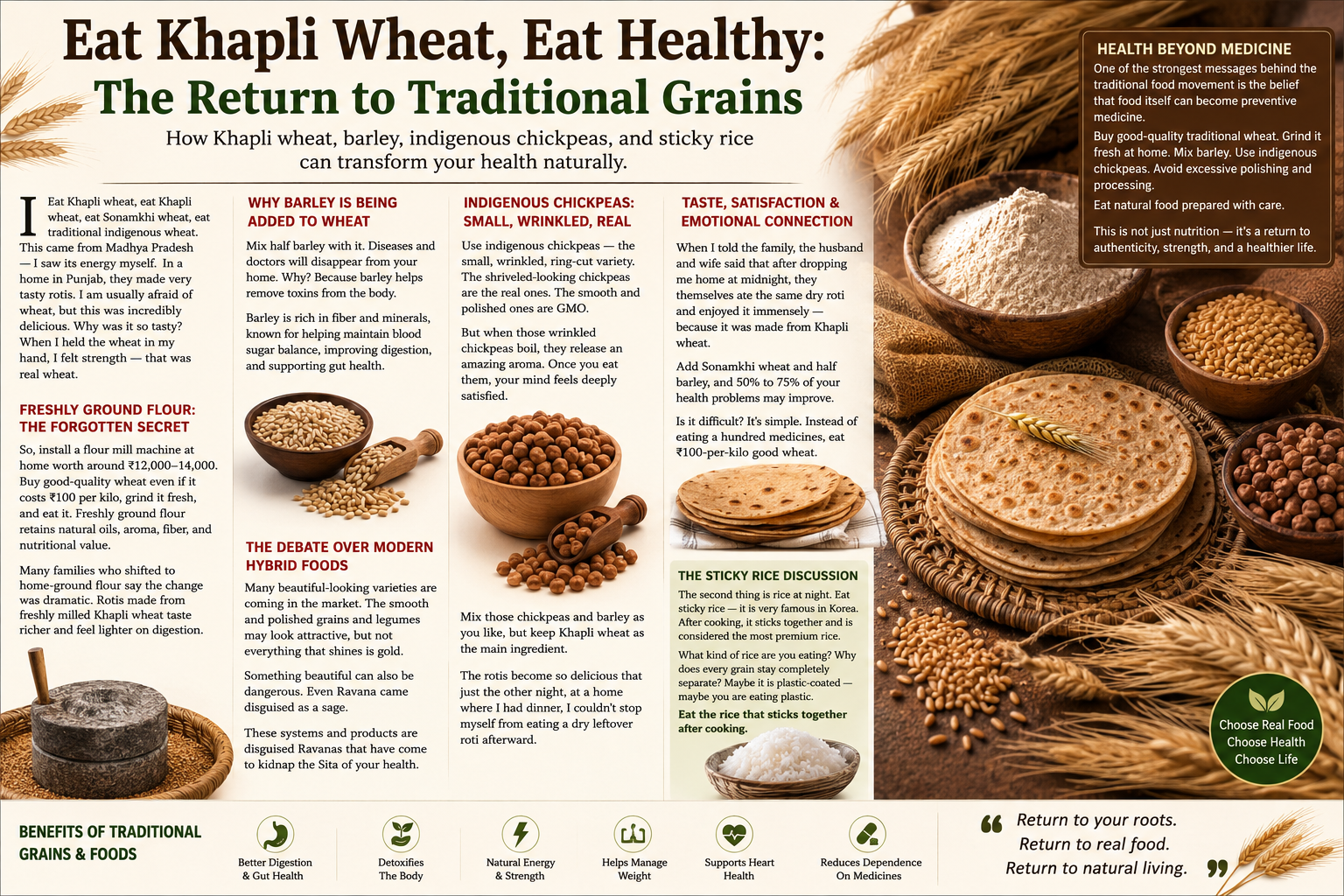
In today’s fast-paced world of packaged foods, polished grains, and heavily processed diets, many people are beginning to rediscover the value of traditional eating habits. Across India, health-conscious families are increasingly exploring indigenous grains such as Khapli wheat, barley, and traditional chickpeas as part of a more natural and balanced lifestyle.
What was once considered simple village food is now being appreciated for its connection to traditional farming, whole-food nutrition, and minimally processed eating.
Nutrition experts say growing awareness about food quality, processing methods, and lifestyle-related health issues has encouraged people to revisit older dietary practices. Many consumers now prefer foods that are less refined and closer to their natural form.
Among these traditional grains, Khapli wheat — also known as Emmer wheat — has attracted significant attention in recent years.
Growing Interest in Khapli Wheat
Khapli wheat is an ancient wheat variety traditionally cultivated in parts of Maharashtra, Madhya Pradesh, and neighboring regions. Unlike many modern high-yield wheat varieties, Khapli wheat is valued for its rich texture, earthy flavor, and traditional nutritional profile.
Many consumers describe rotis made from Khapli wheat as softer, more flavorful, and satisfying compared to ordinary refined flour products. Some individuals also report that freshly prepared traditional grains feel lighter and more wholesome as part of a balanced diet, although experiences may vary from person to person.
Freshly Ground Flour Making a Comeback
Another major trend linked to traditional grains is the growing popularity of home flour milling.
Health-conscious families are increasingly choosing to buy whole grains and grind flour fresh at home instead of relying entirely on packaged flour. Traditional food supporters believe fresh flour may better preserve natural aroma, fiber, and texture.
Small domestic flour mills are now becoming more common in urban households interested in whole-food cooking practices.
Many families say rotis prepared from freshly ground wheat and barley flour offer a richer taste and more authentic eating experience.
Why Barley Is Being Mixed with Wheat
Traditional Indian diets often combined multiple grains instead of depending on a single staple crop. Barley, millets, pulses, and sorghum were commonly mixed with wheat to create balanced meals.
Barley has regained popularity because it is naturally rich in fiber and is widely associated with digestive wellness and balanced nutrition. Nutritionists generally agree that whole grains and fiber-rich foods can support overall health when included as part of a balanced diet.
Some families now combine barley flour with wheat flour in partial proportions to diversify nutrient intake and improve dietary variety.
Traditional Foods and Modern Eating Habits
The growing interest in indigenous grains has also triggered broader conversations about modern food processing and refined diets.
Many consumers today are becoming more conscious about overly polished grains, packaged foods, and heavily processed products. Traditional food advocates often emphasize that natural foods may not always look visually perfect, but can still provide nutritional value and authentic taste.
Traditional chickpeas, locally grown grains, and minimally processed foods are increasingly being preferred by people looking for simpler and more natural eating habits.
Ancient Grains Seeing Global Revival
The revival of ancient grains is not limited to India alone. Across many countries, grains such as emmer wheat, spelt, and quinoa are becoming popular among consumers interested in traditional and minimally processed foods.
Khapli wheat itself belongs to the ancient emmer wheat family and is now being explored by people seeking alternatives to heavily refined grains.
Some studies suggest ancient grains may contain higher fiber and micronutrient content compared to highly refined products, though dietary needs vary between individuals. Health experts also advise that people with medical conditions, allergies, or gluten intolerance should consult healthcare professionals before making significant dietary changes.
Focus on Balanced Nutrition
Nutritionists emphasize that no single grain or food should be viewed as a miracle solution for health problems. However, diets rich in whole grains, natural fiber, and minimally processed foods are widely associated with better long-term wellness and healthier eating patterns.
Experts also stress the importance of combining good nutrition with other healthy lifestyle habits such as regular exercise, proper sleep, hydration, and stress management.
A Return to Simpler Food Choices
For many families, the movement toward traditional grains represents more than just nutrition. It reflects a desire to reconnect with simpler food habits, local agriculture, and homemade cooking traditions.
Fresh rotis made from Khapli wheat, barley, and traditional grains are increasingly being appreciated not only for their taste, but also for the sense of authenticity and cultural connection they bring to everyday meals.
As awareness about natural foods continues to grow, indigenous grains and traditional farming practices may play a larger role in the future of sustainable and mindful eating in India.