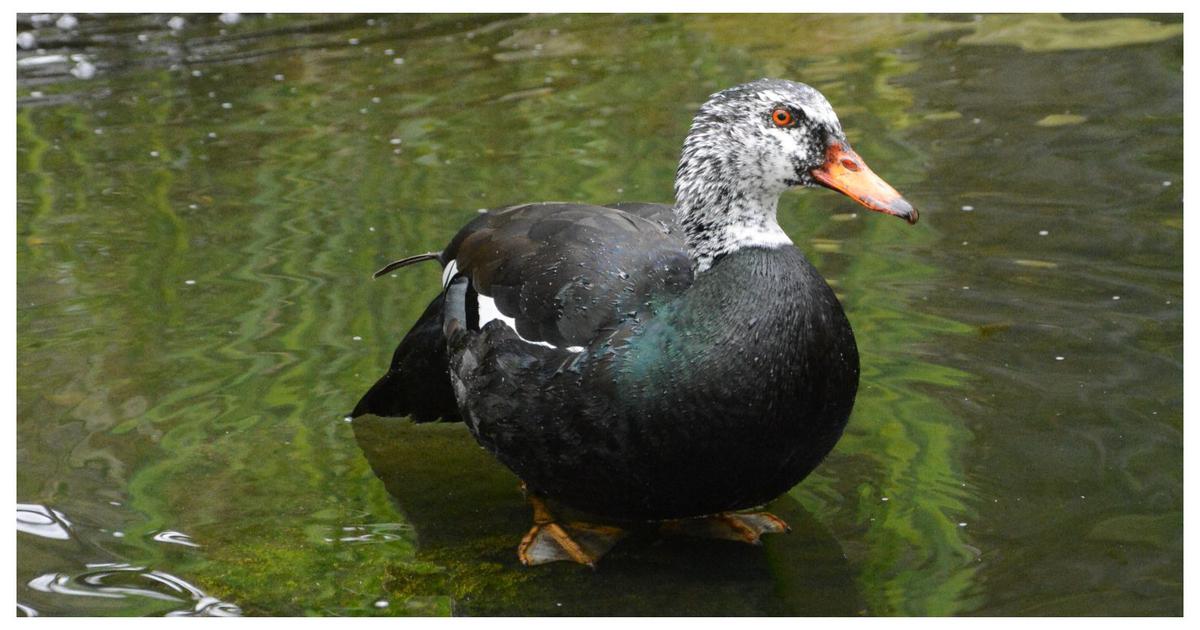
In the lush forests of Assam, the enchanting white-winged duck (Asarcornis scutulata), the state’s bird, is more than just a rare species; it embodies the rich biodiversity of India’s northeastern landscapes. Known for its striking large wingspan of up to 153 cm (5 feet) and unique white underwings, this duck is as elusive as it is magnificent. With its home rooted in the forested swamps of South and Southeast Asia, including regions like Bhutan and parts of Indonesia, the white-winged duck has captured the fascination of nature lovers and conservationists alike.
A recent courtship display among these ducks reveals their intriguing social behaviors. As a male white-winged duck spots a potential mate, he engages in an elaborate courtship ritual, bobbing his head and emitting a series of high-pitched calls that could easily be mistaken for the cheerful honk of an ice-cream truck. His persistence is met with a delicate dance of indifference from the female, who subtly shows interest without immediate commitment, prompting a back-and-forth exchange of head-bobbing and calls.
However, despite their captivating behaviors, much about the white-winged duck remains shrouded in mystery. Biologist Aftab Ahmed from the Wildlife Trust of India highlights the significant gaps in our understanding of these remarkable birds. “We lack detailed knowledge about their feeding and mating habits, as well as the survival rates of their ducklings in the wild,” he explains. The elusive nature of these ducks makes systematic research incredibly challenging, resulting in much of the available information being anecdotal at best.
The white-winged duck’s tranquil demeanor during the day contrasts sharply with the haunting calls that resonate through Assam’s forests at dusk, earning them the local moniker “deo hans,” which translates to “spirit ducks” in Assamese. This name reflects not only their ethereal presence but also the deep cultural connections that these birds have with the region.
As conservation efforts continue, understanding the ecological role and behaviors of the white-winged duck becomes increasingly vital. Protecting their habitat and ensuring the stability of their populations is not just an environmental issue; it also ties into the preservation of Assam’s heritage and natural beauty. Nature enthusiasts and researchers alike are encouraged to turn their attention towards these magnificent birds, as unraveling their secrets could lead to more effective conservation strategies and a deeper appreciation for the biodiversity that Assam holds.