"The Soldier Who Guarded the Nation, Yet Struggles to Secure His Own Home"

By
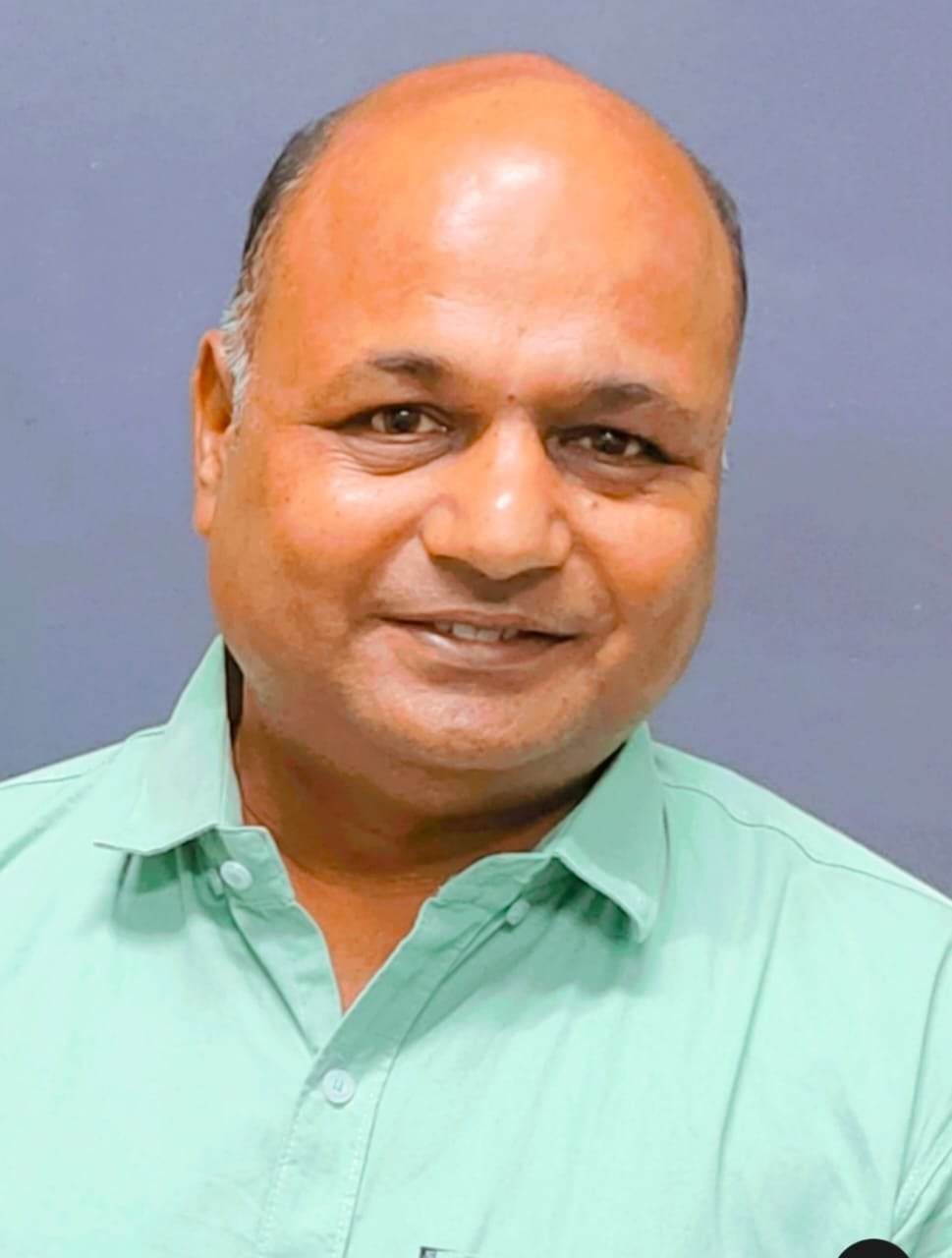
Col (Dr.) Ashwani Kumar, MiD, VSM (Retd.).
Three brothers, a legacy of national service, three residential plots, and a veteran's painful question: Does a soldier's sacrifice retain its meaning after retirement?
There are battles that a soldier fights with a weapon in his hand, and there are battles that he is compelled to fight with documents in his hands. The first may threaten his life, the second can test his faith in the very institutions he spent a lifetime serving.
This is the story of a decorated Indian Army veteran, his two brothers from other uniformed services, and three small residential plots in Kalka- Pinjore, Haryana.
It is also a story about the distance between public expressions of gratitude towards soldiers and the experience of a veteran seeking a fair administrative decision.
After decades of service, the family is not asking for a favour, a reward, or an exemption from law. It seeks examination of its property records, a fair hearing, and a reasoned decision. Yet, the prolonged uncertainty has left one deeply personal question echoing in the mind of a soldier:
Did I make a mistake by choosing to serve the nation, if, after retirement, I must struggle to have my legitimate grievance heard?
A family whose legacy is service.
I belong to a family whose association with the freedom struggle and national service has continued across generations. The spirit of service did not end with Independence. It found expression in the uniformed services through the next generation.
Three brothers carried that legacy forward, one serving in the Indian Air Force, another in the Indian Army, and the third in the police service. For us, service was never merely a profession. It was a commitment that shaped our lives, our responsibilities, and our understanding of duty.
My own military career involved operational assignments, military intelligence, and service in sensitive areas. I am a highly decorated Indian Army veteran, a recipient of the Mentioned in Despatches (MiD) gallantry distinction and the Vishisht Seva Medal (VSM), with more than 16 awards received during my service and professional career. These honours are not mentioned to claim superiority over another citizen. They are part of a life spent serving the country. A soldier's uniform may be removed after retirement, but his expectation of fairness should never be retired.
Three plots, Three brothers, one dream.
In 1989, the three brothers purchased residential plots in Nangal Sodhian, Kalka- Pinjore. The plots, numbered 3, 4 and 5, were purchased and mutated in the respective names of the owners, thinking that after retirement we all three will stay together near Him Shikha a place near the Ghagar river and spend rest of our life.
Plots were not purchased for speculation or commercial gain. They represented a simple aspiration to have a home after years of postings, transfers, operational responsibilities, family separation, and uncertainty.
For a soldier, home is more than a structure or a piece of land. It is the place where one hopes to spend the years after service, where family members can gather, and where the long years of duty may finally give way to peace.
The three plots were part of that dream.
However, subsequent land acquisition proceedings brought the family's ownership into a prolonged dispute.
The question that remains unanswered.
The central grievance concerns the treatment of objections submitted during the land acquisition process under Section 5-A of the Land Acquisition Act, 1894.
The family maintains that its plots were covered through objections submitted by Hill View Cooperative House Building Society and that the original records require proper examination.
Particular reference has been made to the proceedings and recommendations of the Land Acquisition Officer dated 23 July 2008, along with connected records, which the family believes are material to determining whether the plots were considered for release from acquisition.
An administrative order dated 28 November 2014 recorded that Capt. Ashwani Kumar had not filed objections under Section 5-A.
That observation is disputed.
The family's position is that its interest was represented through the Society's objections and that the relevant objection sheets, including the entry associated with Objection No. 14, Village Nangal Sodhian, should be examined before a final conclusion is reached. This is where an impartial administrative examination becomes essential. The family is not asking the authorities to accept its version without scrutiny. It seeks examination of the original acquisition file, verification of the objection sheets, reconciliation of the recommendations with the final orders, and a speaking decision based on the documentary record. If the records support the family's claim, appropriate relief should follow in accordance with law. If they do not, the reasons should be clearly recorded and communicated. Justice requires neither automatic acceptance nor automatic rejection. It requires a fair hearing and a reasoned decision.
When a soldier becomes a petitioner.
A citizen approaching government offices over a property dispute expects the basic courtesies of a democratic system, access to records, an opportunity to be heard, transparency in decision-making, and timely disposal of the representation. For a retired soldier, however, the experience carries an additional emotional burden.
He has spent years accepting difficult conditions, serving away from family, and performing duties without knowing when the next peaceful day will arrive. After retirement, when he approaches the administration regarding his own registered property, he expects the same institutional fairness that he upheld during his service.
Instead, prolonged correspondence, repeated requests, and the difficulty of obtaining a clear resolution can create a sense of helplessness.
The issue is not whether a retired officer should receive special consideration because of his uniform. The issue is whether every citizen, including a veteran, should receive the consideration that the law already guarantees. A soldier does not ask for the law to bend for him. He asks that it be applied fairly to him.
When the Patwari's pen appears more powerful than the citizen's voice.
There is another dimension to this grievance that troubles me deeply not merely as a retired Army officer, but as an ordinary citizen who still believes in the integrity of India's administrative institutions.
In land-related matters, the Patwari's report, revenue entries, and field-level notings can carry considerable practical weight. A citizen may approach the Deputy Commissioner, senior IAS officers, or even the Chief Minister, but the factual position placed before the decision-making authority often originates at the local revenue level. This raises a fundamental question, if the underlying report or revenue record is disputed, who independently verifies it? Who ensures that the affected citizen's version is examined before an administrative conclusion is reached?
The Chief Minister's Office and CM Window were created to provide citizens with an accessible mechanism for registering and pursuing grievances. Their purpose is to bridge the distance between the public and the administration.
Yet, when a citizen repeatedly submits representations through these channels and still fails to receive a clear, independently verified resolution, a painful perception begins to take root: Is the CM Window truly a mechanism for delivering justice, or merely a window for receiving complaints, while the final outcome remains dependent upon the same chain of official notings?
What is even more distressing is the possibility that a representation questioning an earlier decision is referred back to the very official whose report, recommendation, or action is under challenge, seeking his clarification or comments. If the original decision or report is found to be erroneous, can the same functionary reasonably be expected to independently identify and correct his own error without scrutiny by a higher or independent authority?
And if the complainant is repeatedly sent back into this cycle, how long is he expected to wait for justice? Can a citizen's legitimate grievance remain unresolved indefinitely merely because the concerned official has occupied the same position or exercised influence over the process for decades?
A grievance redressal mechanism must not become a mechanism for recycling grievances. It must provide independent examination, accountability, and a reasoned conclusion. Otherwise, the citizen is left with a complaint number and a reference to a window, but no meaningful assurance that justice is moving any closer.
I do not suggest that every Patwari or revenue official acts improperly. Nor do I question the lawful authority of the administrative hierarchy. My concern is about a process in which a disputed local report may acquire decisive practical influence without adequate independent verification.
As a soldier who served under the command of senior officers and respected the chain of command, I find myself asking a question that is both personal and painful:-
Have I made a mistake by choosing to serve in the Armed Forces, if, after retirement, my voice as a citizen carries so little weight against an unresolved local revenue report?
Does the authority of a Patwari's pen, in practical terms, become greater than that of senior administrative officers to whom a grievance is submitted, simply because the decision-making process depends upon that report?
And then another question troubles me:-
Do the medals I earned still have any shine? Do the years spent on the borders, the nights of operational uncertainty, the sacrifices of family separation, and the risks undertaken in the service of the nation have no meaning when I seek a fair hearing for my own property?
These are not questions asked to demand privilege. They are the anguished questions of a veteran who expected that the institutions he served would, at the very least, hear him fairly.
A Patwari's report may be an important administrative input. It should not become an unquestionable substitute for verification, reasoned consideration, and accountability.
The dignity of public administration lies not in the designation of the official who prepares a report or signs an order. It lies in the truthfulness of the record, fairness of the process, and willingness of the competent authority to examine a citizen's grievance independently.
If a soldier's decades of service cannot secure him a decision based on the original records and the rule of law, the question is no longer confined to three plots of land. It becomes a question about the citizen's faith in the system itself.
The politics of gratitude and the administration of justice.
Every year, particularly around national occasions and festivals, photographs of political leaders visiting border posts, meeting soldiers, exchanging greetings, and sharing sweets are widely circulated.
Such gestures may carry symbolic value. They remind the public of the sacrifices made by the armed forces and provide an opportunity to express national gratitude.
But gratitude must have a life beyond the camera.
What happens when the same soldier returns to civilian life and faces an unresolved administrative grievance?
Who ensures that his representation is examined? Who follows up on the availability of original records? Who takes responsibility for ensuring that a veteran is not left moving from one office to another without a clear answer? The question is not directed at any one political party or individual. It concerns the larger relationship between the State and those who served it. A visit to a border post is a visible expression of respect. A fair and timely decision on a veteran's legitimate grievance is its administrative expression.
Both matter.
The credibility of institutions is strengthened not merely by public declarations of respect but by the way they respond to a citizen seeking lawful relief. Do veterans' welfare institutions reach the last mile? India has veterans' welfare organisations, ex-servicemen associations, grievance mechanisms, and administrative channels intended to address the concerns of retired personnel. Their existence is important. Yet, the real measure of any welfare mechanism lies in its ability to help an individual case reach a fair conclusion.
A veteran facing a complicated land acquisition matter may require assistance in identifying old records, understanding the administrative sequence, obtaining certified documents, and ensuring that the competent authority considers the representation.
The question is whether such support is sufficiently accessible, coordinated, and effective in cases involving prolonged disputes.
Veterans do not always seek financial assistance or ceremonial recognition. Sometimes they need something far more basic, someone to examine the file, identify the issue, and ensure that the competent authority takes a decision.
The present grievance involving the three plots illustrates why effective grievance redressal must be measured by outcomes rather than the mere existence of institutions.
The human cost of a prolonged dispute.
A land dispute is often described in files through survey numbers, khasra details, notifications, objections, recommendations, and administrative orders.
But behind every file is a human story.
For the three brothers, the plots represented a shared aspiration built during their years of service. The uncertainty surrounding their status has affected not only their property interests but also the peace of mind associated with retirement.
A veteran who has lived through operational hardship should not have to spend his later years repeatedly explaining the history of his own property, searching for records, and seeking clarity on decisions made years earlier.
Time is not a neutral factor in such matters. As years pass, records become harder to trace, witnesses become unavailable, and the emotional and financial burden grows. That is why administrative delay, even without any finding of deliberate wrongdoing, can become a serious hardship for the affected citizen.
Where records are disputed or unavailable, the appropriate response should be preservation, reconstruction where legally permissible, verification, and accountability through established procedures—not indefinite uncertainty.
What is being sought?
The family's appeal is neither an attempt to bypass the acquisition law nor a demand for an outcome without examination.
It seeks:
- Verification of the original Section 5-A objection sheets and connected acquisition records.
- Examination of the Society's objections and the relevant recommendations of the Land Acquisition Officer.
- Reconciliation of the records with the administrative order dated 28 November 2014.
- A fair opportunity of hearing to the affected owners.
- A reasoned decision on the legal status of Plots Nos. 3, 4 and 5, including consideration of any relief permissible under law.
- Appropriate protection of the family's lawful interests pending a decision, wherever legally warranted.
These are not extraordinary demands. They are requests for procedural fairness, transparency, and an effective administrative remedy.
If any discrepancy is established in the official record, it should be examined by the competent authority and dealt with under law. No individual should be condemned on allegation alone, but no genuine grievance should be dismissed without proper verification either.
A soldier's final appeal.
There is a particular irony in the life of a soldier who has spent years protecting the nation's borders but finds himself unable to obtain certainty about the roof under which he hopes to spend his retirement. At the frontier, a soldier stands guard so that citizens may live in peace. In retirement, he seeks the same peace for his own family.
He does not ask the government to reward him with someone else's property. He does not ask for an exemption from law. He asks that the land purchased and recorded in his name be dealt with through a transparent and lawful process.
His medals cannot decide a land dispute. His service record cannot substitute for documentary evidence. But neither should his years of service make his grievance less worthy of attention.
The State must remain impartial, but impartiality should never become indifference.
The authorities concerned have an opportunity to resolve this matter through a careful examination of the original records, a fair hearing, and a reasoned order. Such action would not merely address one family's grievance; it would reinforce confidence in the administrative system.
For a veteran, justice is not a favour bestowed by a government. It is a right that flows from the Constitution and the rule of law.
The soldier who stood guard in the darkness of the frontier should not have to stand helpless in the daylight of a government office. After a lifetime of service, all he seeks is a fair hearing, a lawful decision, and the dignity of calling his own home his own.
Author's Note.
Col (Dr.) Ashwani Kumar, MiD, VSM (Retd.) is a retired Indian Army officer, military intelligence professional, and strategic affairs commentator. A recipient of the Mentioned in Despatches (MiD) gallantry distinction and the Vishisht Seva Medal (VSM), he has received more than 16 awards during his service and professional career.
Disclaimer:
This editorial reflects the author's personal experience and the grievance presented by the affected family concerning the land acquisition proceedings at Nangal Sodhian, Kalka- Pinjore. The disputed facts and documentary records are subject to verification by the competent authorities. References to administrative actions or omissions are not findings of misconduct or illegality against any individual. The article seeks fair examination, transparency, and resolution in accordance with law.