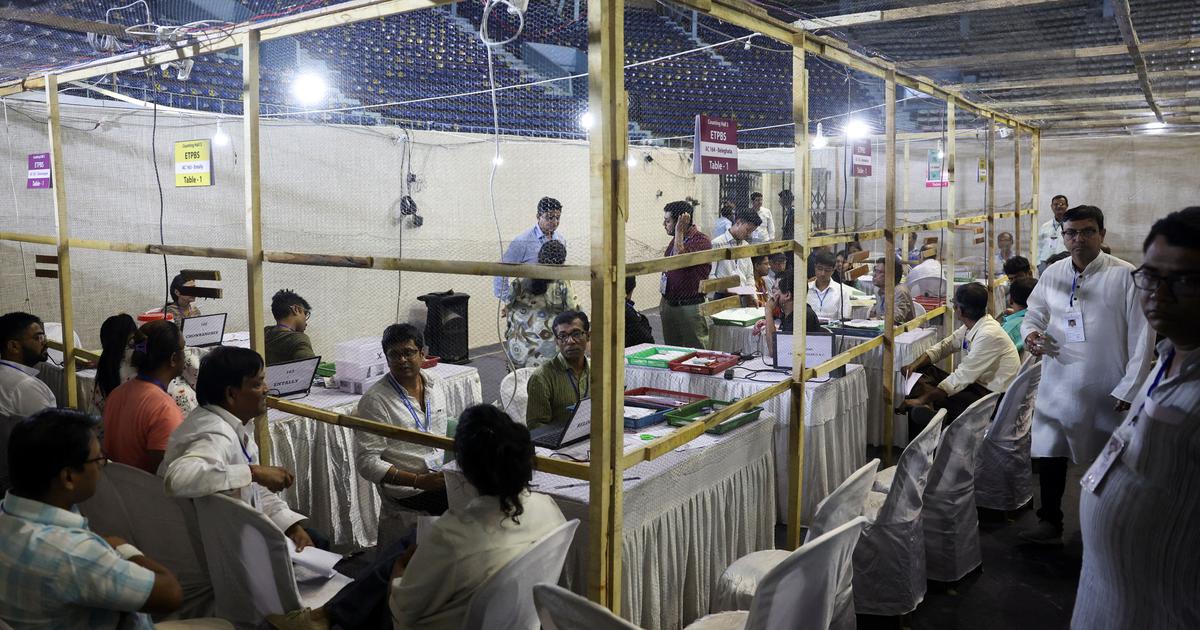
The recent electoral outcome in West Bengal has stirred a political storm, particularly following the controversial voter roll revision by the Election Commission of India (ECI) that led to the Bharatiya Janata Party (BJP) securing a significant victory with 207 seats. This development has drawn attention to a staggering figure: approximately 1.36 crore voters were flagged by the ECI for having ‘logical discrepancies’. With around 27 lakh individuals appealing against their removal from the electoral rolls, the legitimacy of the election and the actions of the ECI are now under intense scrutiny.
Critics argue that the Special Intensive Revision (SIR) of the electoral rolls in West Bengal raises serious constitutional questions. First and foremost, the ECI introduced the term ‘logical discrepancies’ without any statutory backing. This new category seems to create a vague and subjective standard for evaluating voter eligibility, raising concerns about its legality and the commission’s authority to impose such a classification.
Moreover, the delegation of responsibilities pertaining to voter eligibility to officials who possess quasi-judicial powers but lack adequate training and procedural guidelines has further complicated the situation. The absence of clear standards not only undermines the transparency of the electoral process but also introduces the potential for arbitrary decisions that could disenfranchise numerous voters.
Lastly, the mechanism put in place for appeals is seen as ineffective, given the limited time frame before polling. Many disenfranchised voters remain without realistic avenues to contest their exclusions, creating a situation where administrative delays contribute to mass disenfranchisement. In this context, the Supreme Court’s handling of the Mostari Banu v Election Commission of India case becomes crucial. Critics believe that the court should have intervened to stay the exclusions based on ‘logical discrepancies’ and compelled the ECI to clarify the criteria used in such assessments.
As the political landscape continues to evolve in West Bengal, the implications of this voter roll revision will likely resonate beyond the state’s borders. The concerns raised about the integrity of the electoral process underscore the necessity for reforms in how voter eligibility is determined and the safeguards needed to protect citizens’ rights. As India moves forward, ensuring fair and transparent elections remains paramount, and the actions of the ECI will be watched closely by citizens and political observers alike.