Changing Aspirations: Understanding the Challenges Faced by Youth in West Bengal
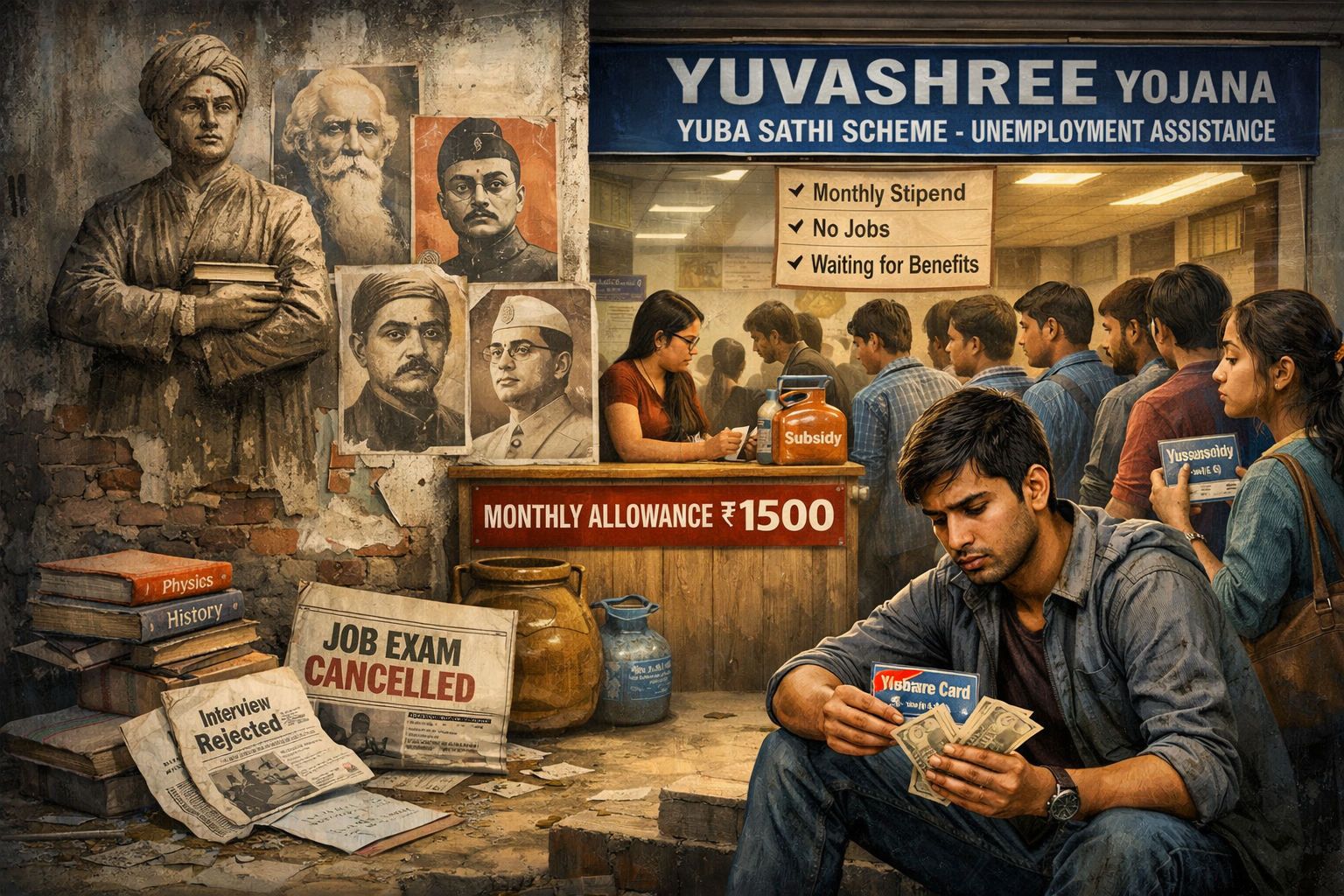
In the historic corridors of Presidency College and the intellectual spaces of Indian Coffee House, generations of young minds once engaged in discussions on ideas, identity, and nation-building. West Bengal has long been associated with a rich legacy of thought, shaped by figures such as Swami Vivekananda, Subhas Chandra Bose, Rabindranath Tagore, and Kazi Nazrul Islam.
In recent years, however, conversations around youth in the state have increasingly focused on employment challenges, competitive examinations, and evolving career pathways. Many young individuals continue to prepare for government and private sector opportunities, often navigating uncertainty related to exam schedules, recruitment cycles, and limited vacancies.
For instance, students across urban and semi-urban areas describe spending extended periods preparing for competitive exams, while also exploring alternative career options. Government support initiatives such as the Yuvashree Scheme provide temporary financial assistance, helping some applicants manage basic expenses during their preparation phase. At the same time, discussions continue on how such schemes can be complemented with broader employment generation and skill development opportunities.
Experts and observers note that the situation reflects a combination of factors, including evolving job markets, increased competition, and changing economic conditions. Migration to other states for employment, interest in entrepreneurship, and participation in the gig economy are also emerging trends among youth.
Despite these challenges, many young people continue to demonstrate resilience. Some pursue small business ventures, others engage in teaching or skill-based work while preparing for exams, and many remain actively involved in creative and intellectual pursuits.
The broader conversation highlights the need for a balanced approach—strengthening education, improving job creation, ensuring transparent recruitment processes, and supporting innovation. With sustained efforts, the potential of West Bengal’s youth can continue to contribute meaningfully to both regional and national development.