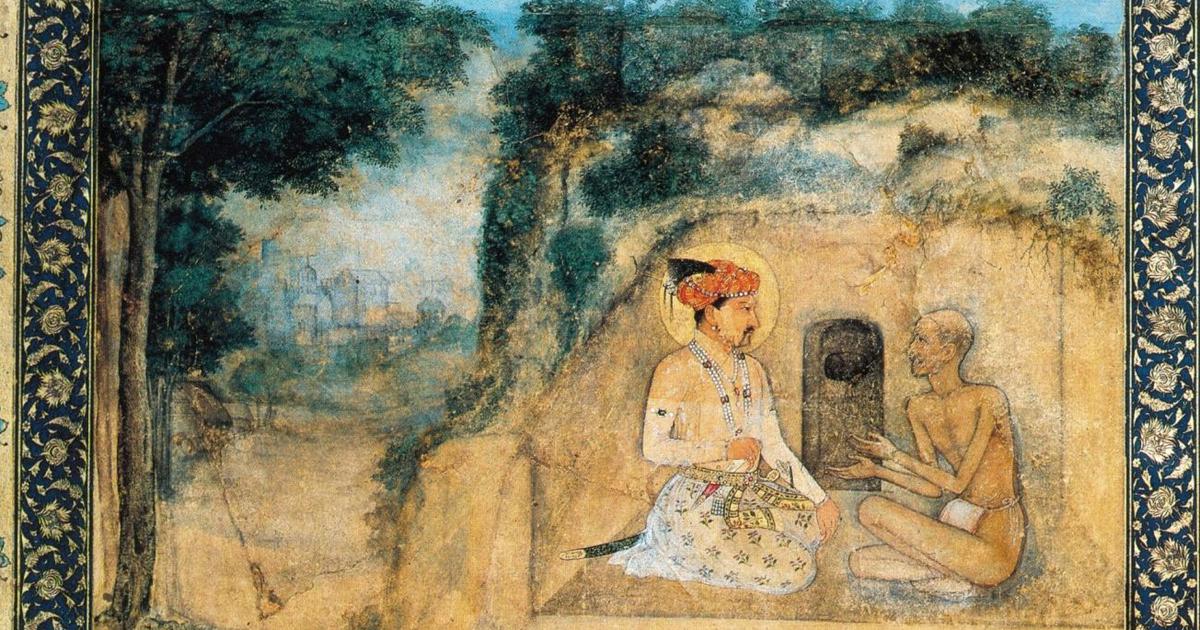
In the winter of 1617, a significant yet often overlooked chapter in the Mughal era unfolded when Emperor Jahangir ventured into a secluded cave near Ujjain. This expedition, which saw him dismount from his royal entourage, led him to an encounter with an ascetic known as Jadrup Gosain. The man, originally named Chitrup, had dedicated his life to the pursuit of Vedantic philosophy, living in deep austerity for nearly four decades.
Jadrup, who had renounced worldly pleasures at the tender age of 22, had cultivated a disciplined life, subsisting on just five mouthfuls of food each day, bathing twice daily, and meditating on the profound connections between the self and the ultimate reality. In stark contrast, Jahangir represented a life of indulgence and internal conflict, often wrestling with the tumultuous dynamics of power, including the rebellion of his son, Khusrau. Yet beneath this facade of excess, Jahangir harbored a profound yearning for emotional and spiritual detachment.
Over the course of two years, Jahangir made several return visits to Jadrup’s austere abode, not to seek counsel on matters of state, but rather to engage in deep philosophical discourses. His conversations with the ascetic were far from trivial; they were steeped in an audacious intellectual ambition. Jahangir aimed to explore the similarities between Vedanta, the philosophical backbone of Hinduism, and Sufism, a mystical branch of Islam that emphasizes personal experience of the divine.
Vedanta teaches that the individual self, or atman, is ultimately one with the universal reality, known as brahman, as expounded in the sacred texts called the Upanishads. On the other hand, Sufism focuses on the inner experience of God, often expressed through poetic language and metaphors. Jahangir’s quest to reconcile these two disparate philosophies was not merely an academic endeavor; it reflected his personal struggles and his search for a deeper understanding of existence.
This intersection of faiths is particularly relevant in the context of India, a nation characterized by its rich tapestry of belief systems. Jahangir’s efforts to marry Vedantic thought with Sufi beliefs highlight the syncretic spirit that has been a hallmark of Indian culture throughout history. His dialogues with Jadrup Gosain serve as a reminder of the potential for unity among diverse spiritual traditions, challenging the rigid boundaries that often separate them.
As India continues to grapple with issues of religious identity and cultural integration, Jahangir’s philosophical explorations offer an intriguing lens through which to examine contemporary dialogues. His legacy is not simply that of a Mughal emperor but also that of a seeker who recognized the complexities of faith and the shared aspirations of humanity.
In an era where divisions can often overshadow commonalities, the story of Jahangir and Jadrup resonates powerfully, urging us to look beyond dogma and find the threads that connect us all.